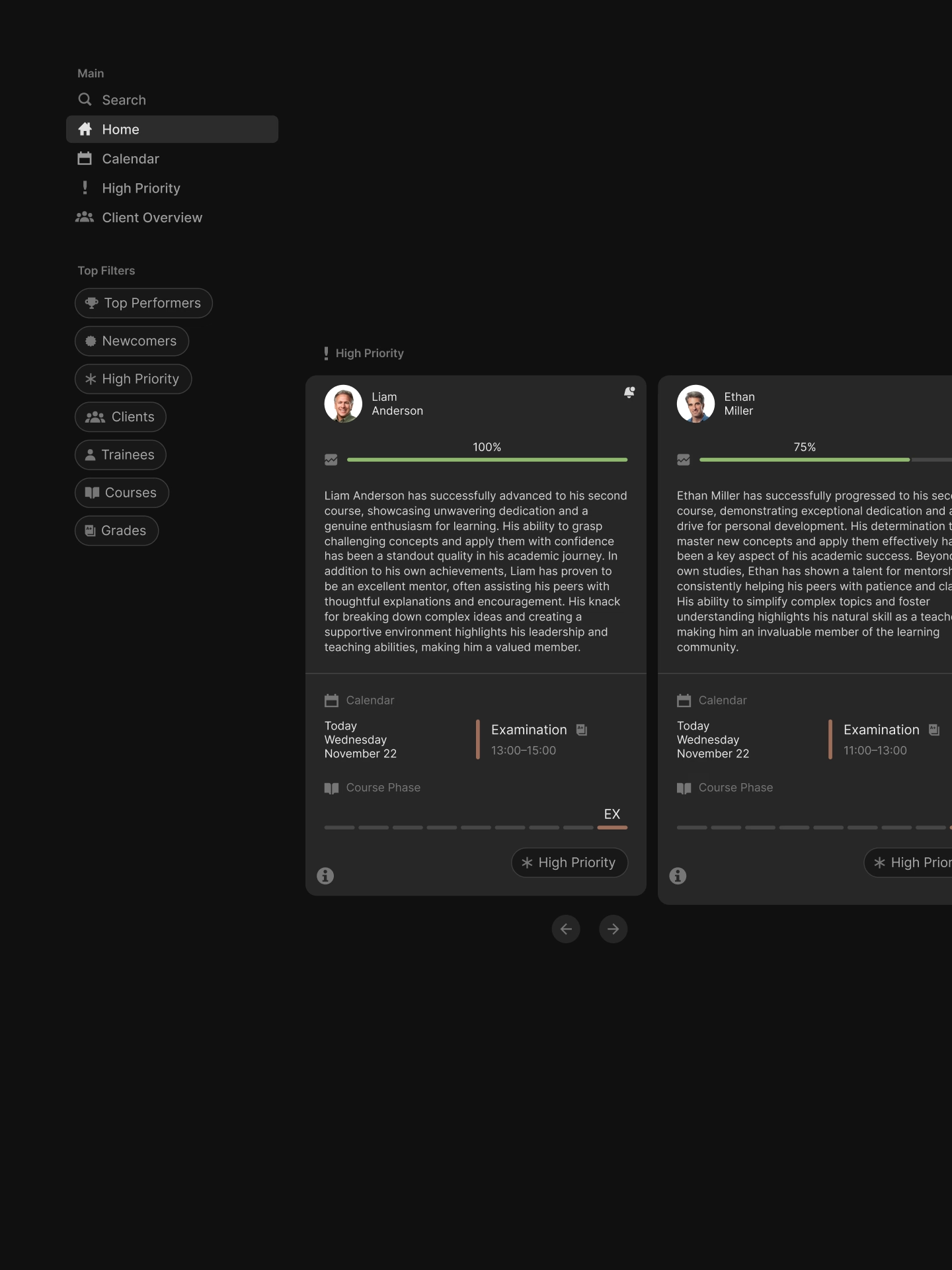
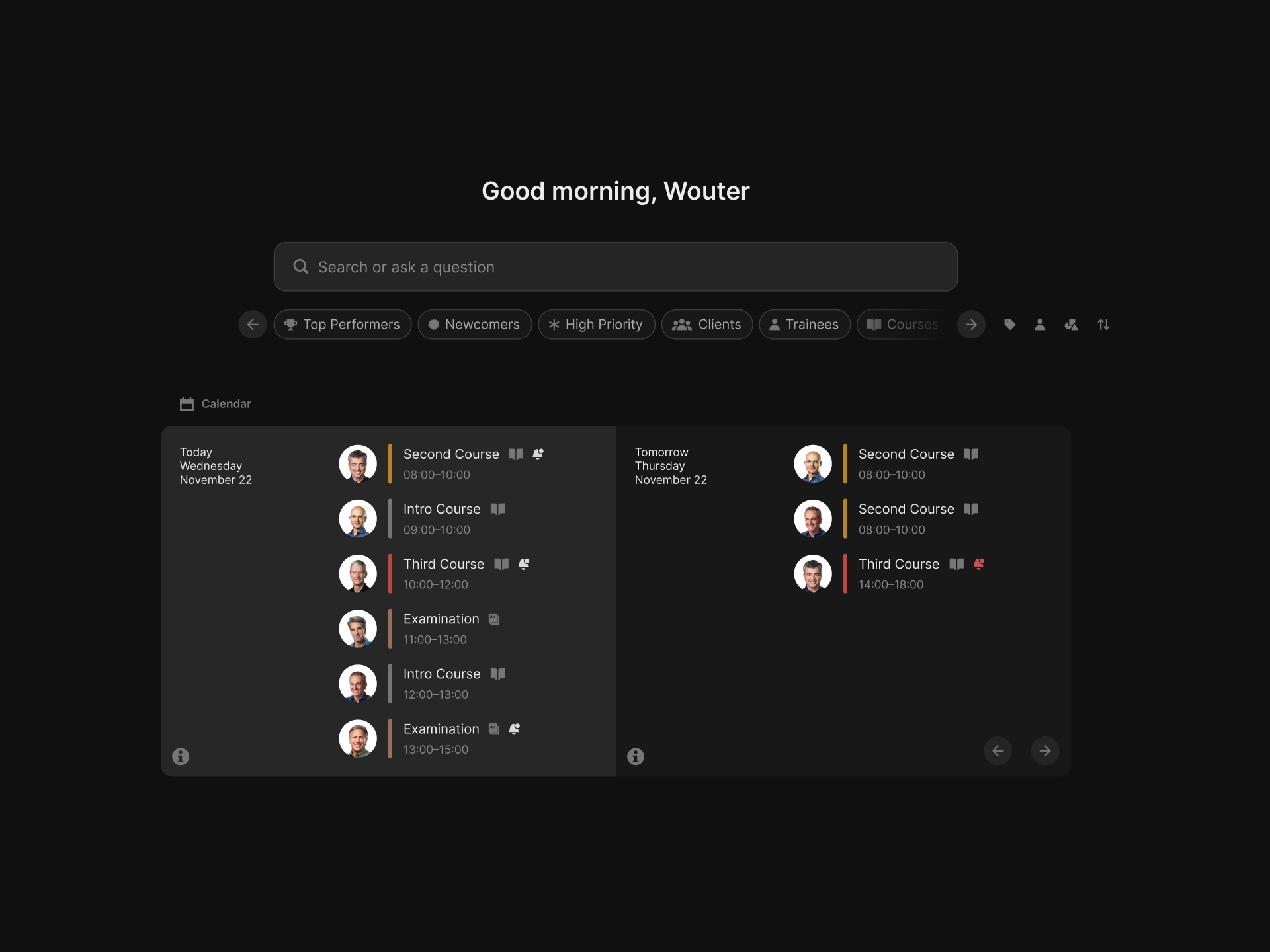
EduApp is a private educational and workforce training platform designed for scalability across Europe — built to manage students, teachers, qualifications, and operational workflows through a clear, modular digital ecosystem. The project focused not on branding or marketing visibility, but on creating application infrastructure capable of simplifying educational administration while remaining highly adaptable to future business growth.

Challenge
A growing educational operation that needed structure, scalability, and clarity.
The platform was built for an organisation running courses that help individuals gain qualifications and employment in the Netherlands, with planned expansion across Europe. The core challenge wasn’t acquisition or marketing — it was operational infrastructure: a digital environment capable of managing large groups of students, progress, certifications, and internal workflows, intuitive for every user type.
Built around operational logic, not visual branding.
Unlike consumer-facing projects where identity dominates, this platform prioritised functionality, clarity, and adaptability above all. Branding was intentionally secondary. The objective wasn’t a visually expressive product, but an experience that felt immediately understandable, frictionless, and operationally reliable. Every decision was evaluated through one question: does this make the platform easier to use?

Challenge
Understand the educational workflow before building the system.
Before development, the operational structure had to be fully mapped — student progression, teacher oversight, qualification tracking, documentation, and the administrative realities behind workforce preparation. We analysed how management evaluates performance, how teachers interact with records, and how information flows as students progress. The system was designed around real operational behaviour.
A modular ecosystem designed for long-term growth.
Scalability was a core requirement. The platform was structured as a modular ecosystem capable of adapting to changing business models, educational structures, staffing needs, and regional expansion. Rather than a rigid interface around a fixed state, the system was designed to remain flexible — accommodating future modules, qualification structures, and growing student volumes without compromising usability.
UX focused on simplicity, speed, and clarity.
Despite the volume of operational information, interfaces were designed to feel clean and highly navigable. Dashboards, documentation systems, qualification tracking, and progress flows were structured to minimise cognitive overload — critical in an environment where teachers, management, and students interact with the platform daily across administrative and educational tasks.

Goal
Create a scalable educational platform that simplifies complexity through clarity and adaptability.
The objective was to build a digital ecosystem supporting educational management, workforce qualification tracking, and long-term organisational growth — without relying on unnecessary visual complexity. The platform needed to remain operationally flexible, highly usable, and capable of evolving alongside the business itself.
Result
A modular application ecosystem built for operational efficiency and long-term scalability.
The final platform established a streamlined educational management environment supporting students, teachers, and administrative teams through a clear, adaptable digital infrastructure. By prioritising usability, modular architecture, and operational logic over visual excess, the application created a stable foundation for educational growth, workforce preparation, and future European scalability.
Invisible by design. Built to simplify, structured to scale.