What Website Redesign Really Means
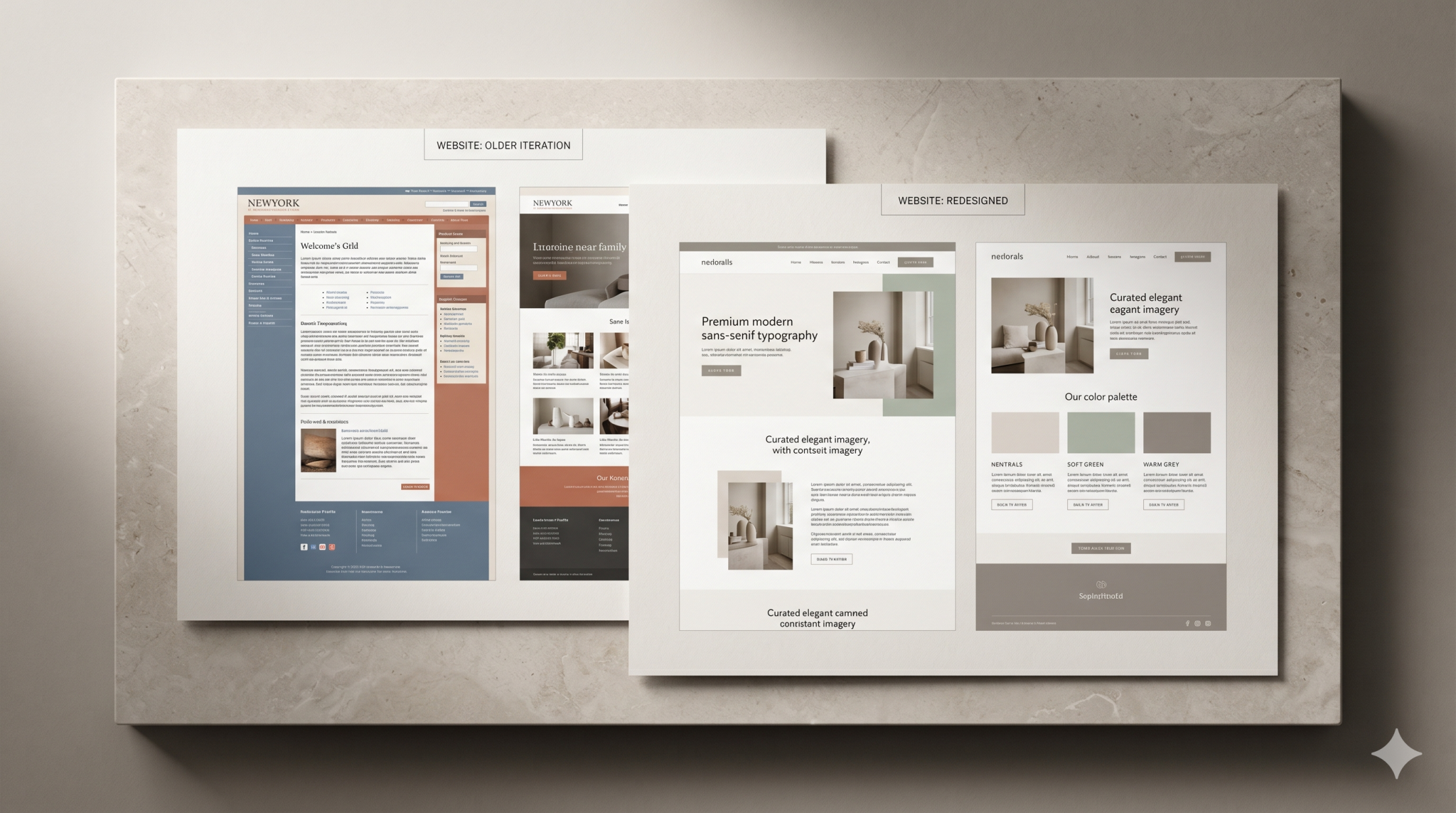
A website redesign is not just a visual refresh. In many cases, it involves rethinking how the site works, how content is organised and how users move through it.
That distinction matters because many businesses use the term loosely. Changing a few colours, replacing images or updating a homepage banner may improve appearance, but it does not necessarily solve deeper performance issues. A proper website redesign usually looks at questions such as:
- Does the current site structure still make sense?
- Can users find what they need quickly?
- Does the content support business goals clearly?
- Are important pages helping people take action?
- Is the platform still flexible enough to support growth?
This is where the difference between a website refresh vs redesign becomes important. A refresh tends to improve surface-level presentation. A redesign looks more closely at the strategy, architecture, user journeys and overall effectiveness of the site.
If the problem is visual fatigue alone, a refresh may be enough. If the site feels confusing, inconsistent or difficult to manage, redesign website decisions usually need to go much further.
The Signs a Site Needs More Than Surface Updates
Many websites do not fail dramatically. They simply become harder to use, harder to maintain and less effective over time. That gradual decline is exactly why redesign needs are often missed.
Here are some common signs that small fixes may no longer be enough.
Your site structure no longer reflects the business
Businesses evolve. Services expand, audiences change, offers mature and priorities shift. But websites often stay locked in an older version of the company.
If the navigation, page hierarchy or messaging no longer reflect how the business operates today, patching isolated pages will only go so far. The issue is usually structural, not cosmetic.
Users struggle to find key information
When visitors have to work too hard to understand what you do, who it is for or what they should do next, the website is creating friction.
This can show up in different ways:
- important information buried too deep
- unclear service pages
- overlapping navigation labels
- weak page hierarchy
- inconsistent calls to action
These problems usually point to UX and content flow issues rather than simple design tweaks.
The website feels inconsistent page to page
A site built over time often becomes uneven. Some pages look modern while others feel outdated. Messaging changes in tone. Layout patterns shift. Content depth varies. Visual inconsistency is often a signal that there is no longer a clear system holding the site together.
In that situation, ongoing small edits can create even more fragmentation.
Conversion paths are weak or unclear
A site may look acceptable on the surface while still underperforming commercially. If users are visiting but not enquiring, booking, requesting quotes or taking other meaningful actions, the site may lack conversion clarity.
This often happens when:
- calls to action are too vague
- pages do not match user intent
- trust signals are weak
- forms are placed poorly
- next steps are not obvious
These are redesign strategy issues, not just styling issues.
Content has become difficult to manage
Sometimes the clearest signal comes from internal teams rather than users. If updating the website is slow, frustrating or dependent on workarounds, the platform may no longer support the business properly.
A redesign can be just as much about improving internal usability and content control as it is about external appearance.
Mobile experience feels compromised
Older websites often struggle most on smaller screens. Even if desktop pages still feel usable, mobile journeys may be cluttered, awkward or slow. Since many users now form their first impression on mobile, poor responsiveness is a strong indicator that broader website improvement is needed.
What a Good Redesign Should Actually Address
A strong website redesign should solve root problems rather than simply modernise the interface. That means looking beyond appearance and focusing on how the site performs as a system.
Structure
Structure is one of the most important parts of any redesign website project. It shapes how users move through the site and how clearly the business communicates.
This includes:
- navigation architecture
- page hierarchy
- service grouping
- landing page logic
- internal linking pathways
If structure is weak, even well-designed pages can feel confusing. A redesign should make the site easier to understand at a glance and easier to navigate with purpose.
User Experience
Good user experience is not about adding visual polish. It is about reducing friction and making important actions feel clear and natural.
A redesign should review how users actually interact with the site:
- what they need first
- what questions they are likely to have
- where they hesitate
- what prevents them from moving forward
This often leads to better page layouts, clearer journeys and more useful content placement.
Content Flow
Content flow is often overlooked in website improvement discussions. A page can contain the right information and still perform poorly if that information appears in the wrong order.
A good redesign should improve how content unfolds across the site and within individual pages. That means helping users move from understanding to trust to action without unnecessary friction.
Better content flow often includes:
- sharper page introductions
- clearer subheadings
- better sequencing of proof points
- simpler explanations
- stronger transitions into calls to action
Conversion Clarity
Conversion clarity means users know what action is available, why it matters and what happens next.
Many websites lose leads not because the offer is weak, but because the path forward is unclear. A redesign should identify and improve the moments where users are most likely to act, whether that means submitting an enquiry, booking a consultation, downloading a guide or requesting a quote.
This is where strategic redesign work becomes commercially valuable. It connects design and UX decisions more directly to business outcomes.
Why Small Fixes Are Sometimes Not Enough
Small fixes are useful when the underlying website is already healthy. If the structure is strong and the user journey works, updates to visual design, copy or individual sections can improve performance efficiently.
But when the foundation is weak, local fixes often create only short-term improvement. In some cases, they make the site harder to manage by adding more layers to an already inconsistent system.
Here is why that happens:
They treat symptoms, not causes
If a page is underperforming because the overall journey is unclear, changing the button colour or rewriting a headline will not fix the real issue. The same applies when poor navigation, weak hierarchy or outdated CMS limitations sit underneath visible problems.
They increase inconsistency over time
Patch fixes are usually made in response to immediate needs. A section is added here, a new page goes there, a quick redesign is applied to one area only. Over time, the site becomes more fragmented and less strategic.
They can delay necessary decisions
Businesses sometimes avoid redesign because it feels like a bigger commitment. That is understandable. But continuing to patch a structurally weak site can cost more over time in missed leads, internal inefficiency and repeated rework.
A thoughtful redesign is not about changing everything for the sake of it. It is about knowing when the current setup is no longer serving the business properly.
How Better Redesign Decisions Improve Performance
A strong website redesign creates more than a cleaner interface. It gives the business a better digital foundation.
When redesign decisions are based on structure, UX and strategic priorities, the results usually show up across several areas.
Better clarity for users
Users understand what the business does faster. They can find relevant information more easily. They feel less friction moving through the site.
Better support for conversion
Important pages become more focused. Calls to action become clearer. Trust-building content appears in the right places. That makes it easier for the site to support enquiries and commercial goals.
Better alignment with the current business
A redesign allows the website to catch up with how the business has evolved. This matters when services, audiences or positioning have changed since the original site was built.
Better internal usability
Modern redesign work often includes CMS improvements, content editing control and more flexible page systems. That makes the site easier to manage and scale over time.
Better long-term efficiency
A strategic redesign reduces the need for constant patching. Instead of reacting to issues one by one, the business gets a more coherent system that supports future updates more effectively.
FAQs
Is a website redesign the same as building a new website?
Not always. Some redesign projects keep existing content or technical foundations and improve structure, UX and presentation. Others require a more complete rebuild. The right approach depends on how deep the current problems go.
What is the difference between a website refresh vs redesign?
A refresh usually updates visual elements such as styling, imagery or light content adjustments. A redesign goes deeper into site structure, user journeys, content organisation and conversion logic.
How do I know whether my site needs redesign work or just website improvement?
If the issues are isolated and the overall site still works well, targeted website improvement may be enough. If the problems are repeated across navigation, content flow, UX and conversion paths, a broader redesign is usually more effective.
Can a redesign help if traffic is fine but enquiries are low?
Yes. A website can attract traffic and still underperform if users are unclear about the offer, do not trust the business enough or cannot find an obvious next step. In that case, conversion clarity may be the real issue.
Should redesign focus on visuals first?
No. Visual design matters, but it should follow structure and strategy. Without a clear foundation, visual updates risk improving appearance without improving performance.
Final Thoughts
Not every website problem requires a full redesign. But many sites reach a point where small changes stop being enough. When structure is outdated, UX is inconsistent and content no longer supports clear journeys, patching the surface rarely solves the deeper issue.
A good website redesign should make the site clearer, more usable and more aligned with how the business actually works today. It should improve not just how the site looks, but how it communicates, converts and scales.
If your site has been relying on small fixes for a while, it may be worth stepping back and reviewing whether the real opportunity lies in structural improvement rather than another quick patch.