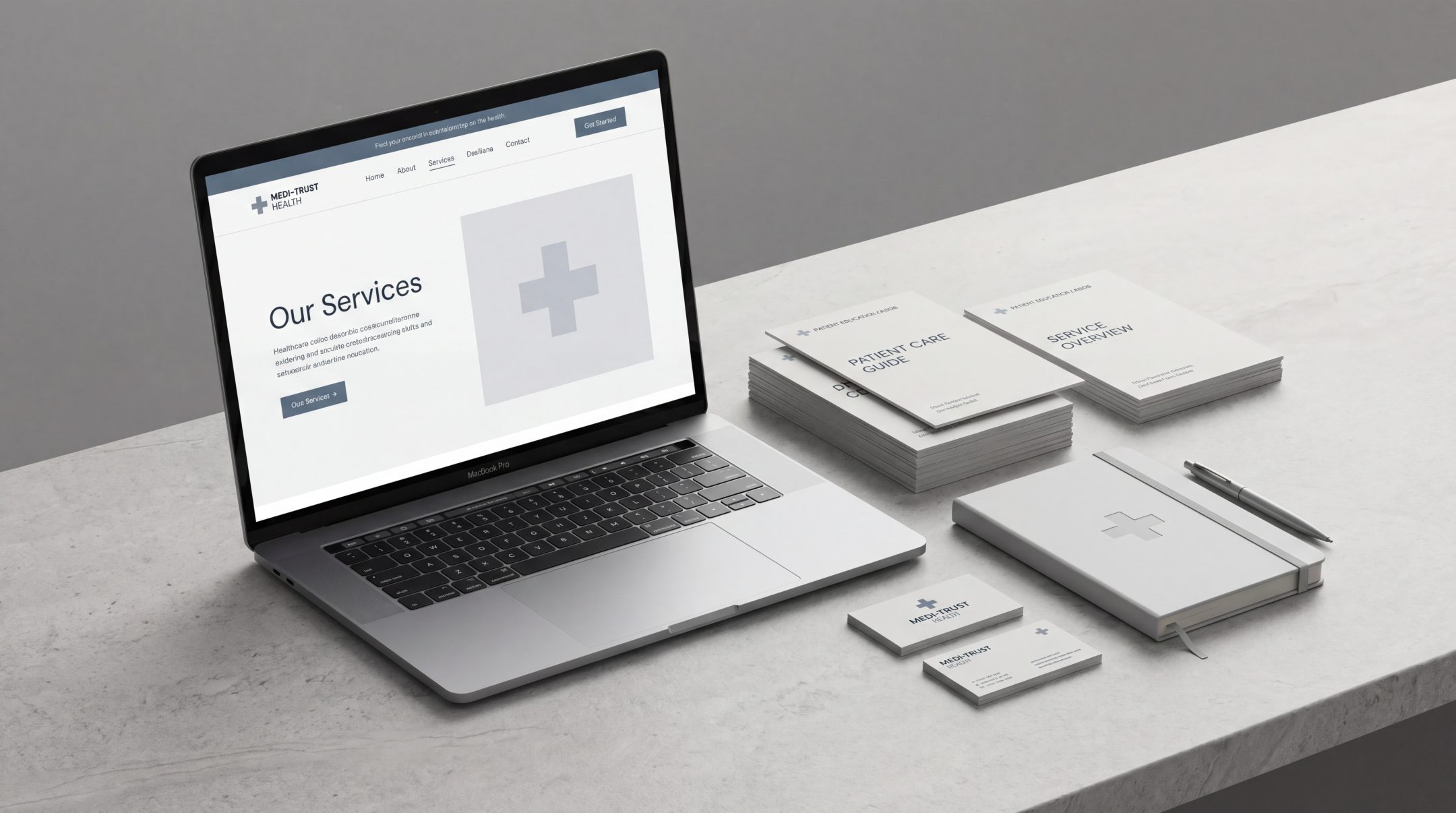
Medical website content has to do more than fill service pages. It needs to help patients understand what a clinic, practice or healthcare provider offers, who each service is for, what happens next and why the organisation can be trusted. When that content is too technical, vague or poorly structured, patients may leave before they find the information they need.
Why Medical Website Content Matters
Medical websites are often visited by people who are looking for clarity at a sensitive moment. They may be comparing clinics, trying to understand symptoms, preparing for a procedure or checking whether a service is right for them.
That makes healthcare website content different from ordinary service copy. The goal is not simply to promote a service. It is to explain it responsibly, reduce uncertainty and guide the reader toward a sensible next step.
Strong medical website content helps patients answer practical questions:
What does this service involve?
Who is it suitable for?
What should I expect before, during or after the appointment?
How do I book, enquire or speak to someone?
Why should I trust this provider?
When these answers are easy to find, the website feels calmer, more professional and more useful. When they are hidden behind jargon or scattered across the site, the experience can feel confusing, even if the medical team is highly capable.
This is where clear content connects directly to digital trust. A well-planned modern healthcare website should make patients feel that information is organised, credible and easy to act on.
What Makes Medical Service Content Different
Medical service pages carry a higher level of responsibility than many commercial website pages. A cosmetics product page, for example, can focus heavily on desirability. A healthcare service page has to balance clarity, accuracy, reassurance and compliance.
Patients do not always arrive with the same level of knowledge. Some understand medical terminology. Others may be anxious, unfamiliar with the service or unsure what kind of help they need. Strong medical service pages need to support both audiences without oversimplifying important information.
The content also needs to avoid two extremes.
The first is over-technical writing. This may feel precise to internal teams, but it can make a service page difficult for patients to use. Long clinical descriptions, unexplained terms and dense paragraphs can create unnecessary friction.
The second is overly vague reassurance. Phrases like “advanced care”, “personalised solutions” or “expert treatment” may sound polished, but they do not explain what the service actually does. Patients need practical information, not just soft claims.
Good medical website content sits between these extremes. It is clear enough for a non-specialist reader, accurate enough for a responsible healthcare brand and structured enough to support quick decision-making.
The Core Requirements of Strong Medical Website Content
Clear Service Explanations
Every medical service page should begin by explaining the service in plain, direct language. The reader should not have to interpret what the page is about.
A strong opening explanation usually covers what the service is, the problem or need it addresses and the type of patient it may help. This does not mean reducing the service to a simplistic description. It means translating expertise into language patients can understand.
For example, instead of starting with a long technical description, a page can begin with a clear summary:
“This service helps diagnose and manage recurring digestive symptoms, including abdominal pain, bloating and changes in bowel habits.”
That kind of sentence gives the patient immediate context. More detailed medical information can follow, but the page first gives the reader a usable starting point.
Clear healthcare communication is not about removing expertise. It is about making expertise accessible. Public health guidance on plain language health information supports this same principle: organise information around the audience, lead with what matters and use clear wording where possible.
Patient-Friendly Structure
Even good writing can fail if the page structure is difficult to scan. Patients often arrive on a service page looking for specific information. They may not read from top to bottom. They may scan headings, compare options or move quickly toward booking details.
A strong medical service page should use headings, short sections and a logical order. The structure should help patients move from understanding to confidence to action.
A useful structure may include:
What the service is
Who the service is for
Common symptoms, concerns or needs
What happens during the appointment
Preparation or aftercare, where relevant
Practitioner or clinic credibility
Booking or enquiry steps
FAQs
This is where website content structure becomes especially important. The page should not simply contain the right information. It should place that information in an order that matches how patients think, compare and decide.
Trust and Credibility Cues
Patients need evidence that the provider is credible, responsible and qualified. Trust should be built into the content, not added as a decorative claim at the end of the page.
Credibility cues may include practitioner qualifications, professional registrations, years of relevant experience, clinic accreditations, patient pathway details, clear explanations of equipment or methods and transparent information about limitations.
However, trust cues need to be handled carefully. They should support confidence without making exaggerated promises. Medical content should avoid absolute guarantees, fear-based persuasion or claims that cannot be clearly supported.
A credible page might say:
“Our clinicians will assess your symptoms, explain suitable options and recommend next steps based on your individual situation.”
That is more responsible than implying a guaranteed outcome. It gives the patient confidence in the process without overpromising.
The same principle applies to tone. Medical service pages should feel calm, professional and human. They should not sound cold, but they should also avoid emotional pressure. The right tone helps patients feel informed rather than pushed.
Simple Next Steps
A patient-friendly medical website does not leave the user wondering what to do next. Once the service has been explained, the page should guide the reader toward a clear action.
This action may be booking an appointment, requesting a call, completing an enquiry form, checking availability or contacting the clinic for guidance. The important point is that the next step should feel natural and proportionate.
For some services, a direct booking button may be appropriate. For more complex or sensitive services, a softer enquiry step may be better. The content should reflect the nature of the decision.
Simple next steps should also explain what happens after the action. For example:
“After you submit the enquiry form, the clinic team will contact you to confirm whether this service is suitable and discuss appointment availability.”
This reduces uncertainty and helps patients move forward with confidence.
Common Medical Website Content Mistakes
One common mistake is writing service pages from the provider’s perspective rather than the patient’s perspective. Internal teams may describe services based on departments, procedures or clinical categories. Patients often search by symptoms, concerns, outcomes or practical needs. Strong medical website content needs to bridge that gap.
Another mistake is assuming that technical language automatically builds credibility. In reality, unexplained terminology can make a page feel less accessible. Technical detail has its place, but it should be introduced after the basic service explanation is clear.
Many medical websites also underuse FAQs. This is a missed opportunity because patient questions are often predictable. A good FAQ section can reduce anxiety, clarify expectations and help users decide whether to take the next step.
A further issue is thin service content. A page that only includes a short paragraph and a booking button rarely gives patients enough context. It may also weaken search visibility because the page does not explain the service in enough depth.
The opposite problem is also common: pages that contain too much undifferentiated information. Long blocks of text can overwhelm users, especially on mobile. Health literacy and usability guidance often emphasises clear layouts, familiar language and easy-to-use health websites, which is why health literacy web guidance is useful when planning patient-facing content.
What Better Medical Content Execution Looks Like
Better medical content starts with structure before copywriting. The team should first decide what the patient needs to know, what the clinic needs to communicate and what action the page should support.
A strong medical service page usually feels calm, ordered and specific. It explains the service clearly, uses patient-friendly headings, includes enough detail to support understanding and avoids unnecessary complexity.
It also connects content with design. A well-written service page can still fail if the layout hides key information or makes the next step hard to find. Content, UX and design need to work together.
In practical terms, stronger execution may include:
A direct opening explanation
Clear section headings
Short paragraphs
Definitions for technical terms
Relevant symptoms or use cases
Responsible trust cues
Clear appointment or enquiry guidance
Concise FAQs
Consistent tone across service pages
For medical brands, this is often part of a wider medical content strategy. Individual service pages matter, but they should also fit into a broader communication system that helps the website educate without becoming too dense or fragmented.
The strongest medical websites do not treat content as a final layer added after design. They use content to shape the patient journey from the beginning.
FAQs
What is medical website content?
Medical website content is the written and structured information on a healthcare website. It includes service pages, practitioner profiles, FAQs, patient guidance, appointment information and educational content. Its role is to help patients understand services clearly and take appropriate next steps.
How should medical service pages be written?
Medical service pages should be written in clear, patient-friendly language. They should explain what the service is, who it is for, what patients can expect and how to book or enquire. Technical terms can be included, but they should be explained where needed.
Why is plain language important in healthcare website content?
Plain language helps patients understand health information more easily. This is especially important when people are anxious, unfamiliar with a condition or comparing treatment options. Clear language supports trust, reduces confusion and improves the overall website experience.
Should medical websites avoid technical terminology completely?
No. Technical terminology can be necessary, especially for accuracy. The issue is not the presence of medical terms, but whether they are explained clearly. A good page can use clinical language while still making the meaning accessible to patients.
How much content should a medical service page include?
A medical service page should include enough information to help patients understand the service and decide what to do next. It should not be thin or vague, but it should also avoid overwhelming users with unnecessary detail. Structure matters as much as length.
Final Thoughts
Medical website content needs to make services easier to understand, not harder to navigate. Patients want clarity, reassurance and practical next steps. Medical brands need accuracy, credibility and responsible communication.
When those needs are planned together, service pages become more useful, more trustworthy and easier for patients to act on. Fact & Form helps medical brands structure and write website content that explains services clearly, supports patient understanding and fits naturally into a stronger digital experience.