What E-commerce Development Covers
E-commerce development is the process of planning, building and improving an online store so it works well for both customers and the business behind it. It includes much more than choosing a platform and uploading products.
In practical terms, e-commerce development often covers:
- site structure and navigation
- category and product page setup
- shopping cart and checkout flow
- mobile responsiveness
- page speed and technical performance
- CMS or product management functionality
- integrations with payment, shipping and inventory systems
- scalability for future growth
This is why ecommerce website development should be treated as both a user experience and commercial project. A store can look polished on the surface but still underperform if product discovery is confusing, checkout is frustrating or the backend is difficult to manage.
Good online store development connects front-end usability with back-end functionality. The goal is not simply to launch a site, but to create a digital sales environment that helps people find what they need and complete purchases with minimal friction.
Why Store Structure and Usability Matter
Online shoppers make decisions quickly. If a store feels difficult to browse, unclear to understand or slow to respond, confidence drops fast. Even strong products can struggle when the buying experience creates unnecessary effort.
Store structure matters because it shapes how users move through the site. Categories, filters, menus, internal search and page hierarchy all influence whether shoppers can discover the right products easily. If these elements are poorly planned, visitors may leave before they ever reach a product page that fits their needs.
Usability matters because it affects trust and conversion. Shoppers expect clear information, intuitive navigation and a straightforward checkout journey. They should not have to guess where to click, search through cluttered layouts or repeat unnecessary steps just to buy something.
From a business perspective, usability also affects growth. A store that is easier to browse tends to support better conversion rates, stronger product visibility and more efficient merchandising. It is also easier to optimise over time when the structure is logical from the start.
In other words, ecommerce UX is not a finishing touch. It is a central part of how an online store performs commercially.
The Core Elements of Strong E-commerce Development
Navigation and Product Discovery
One of the most important parts of e-commerce development is helping users find products quickly and confidently. A store may have excellent inventory, but if the journey to those products is confusing, the experience breaks down.
Strong product discovery usually depends on:
- clear navigation labels
- logical category structures
- useful product filters
- effective internal search
- consistent product tagging
- strong cross-linking between related products or collections
These elements help users browse in a way that feels natural. They also reduce frustration for people who know roughly what they want but still need guidance.
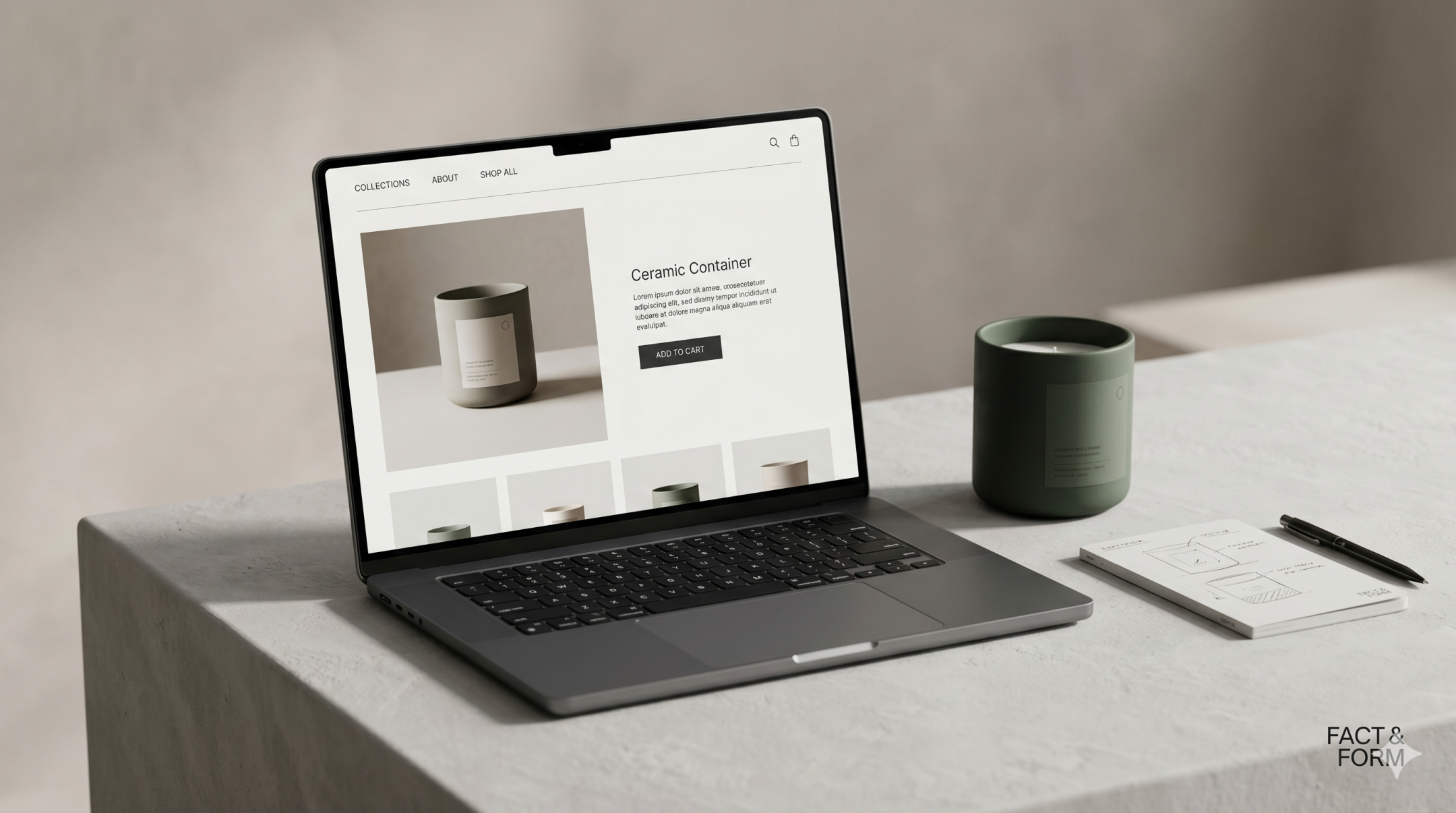
Product pages matter here too. Good e-commerce development supports pages that are easy to scan and informative without feeling overloaded. Product names, images, pricing, specifications, variations and calls to action should all work together clearly.
When discovery is strong, customers spend less time getting lost and more time moving toward purchase.
Checkout Simplicity
Many online stores lose sales at checkout, not because customers changed their minds about the product, but because the process became too difficult. This is why checkout simplicity is one of the clearest markers of strong ecommerce platform development.
A better checkout experience usually includes:
- a minimal number of steps
- clear progress indicators
- simple form design
- visible shipping and payment information
- guest checkout where appropriate
- mobile-friendly input and payment flow
- fewer distractions and less visual clutter
Checkout should feel reassuring, not demanding. Users need to understand what happens next, what information is required and how close they are to completing the purchase.
Removing friction does not mean removing useful information. It means presenting it at the right time, in the right order, without making the process feel heavier than it needs to be.
Performance and Functionality
Fast, reliable performance is fundamental in e-commerce. Users expect pages to load quickly, interactions to respond smoothly and features to work without glitches. Delays, broken elements or inconsistent functionality can quickly affect trust.
Performance-related areas in e-commerce development often include:
- optimised page loading
- clean code and efficient scripts
- responsive design across devices
- stable product filtering and search
- secure payment handling
- reliable cart behaviour
- integrations that work consistently
Functionality also needs to support the specific needs of the business. Some stores need advanced product variations. Others need subscriptions, account areas, trade pricing, region-based shipping or ERP integration. Good development accounts for these needs without making the store feel bloated or difficult to use.
This is where technical quality and customer experience overlap. A feature-rich store is only valuable if those features support clarity and ease rather than adding complexity.
Long-Term Scalability
An online store should not only work for today’s product range or traffic level. It should also be capable of growing with the business. Strong e-commerce development considers what happens when the store expands, not just how it performs at launch.
Scalability can include:
- a structure that supports more categories and SKUs
- a CMS that is easy for teams to manage
- flexible templates for future content or product types
- integrations that can evolve with operations
- development decisions that avoid unnecessary rebuilds later
- architecture that supports marketing, SEO and performance improvements
Scalability is often where short-term builds start to show weakness. A store may feel acceptable with ten products, but become hard to manage with two hundred. It may function well for one market, but struggle when multiple currencies, languages or fulfilment systems are added.
Good ecommerce website development creates a foundation that stays usable as commercial needs become more complex.
Common E-commerce Development Mistakes
A number of common issues can weaken an online store, even when the design looks modern.
One mistake is prioritising visual style over shopping flow. A store can look impressive but still be hard to navigate, difficult to scan or overly dependent on decorative elements that slow down decision-making.
Another is weak information architecture. Poor category logic, vague menu labels and inconsistent product taxonomy make product discovery harder than it should be.
Overcomplicated checkout is another major issue. Extra fields, unclear steps and unnecessary barriers create friction at the point where confidence matters most.
Performance problems are also common. Heavy pages, slow-loading media and unstable functionality make the whole store feel less trustworthy.
Some businesses also underestimate the importance of content and product data. Thin descriptions, inconsistent specifications and weak product imagery make even well-developed stores harder to buy from.
Finally, many stores are built without enough thought for long-term management. If adding products, editing pages or updating promotional content becomes frustrating for internal teams, growth becomes harder to support.
What Better Online Store Execution Looks Like
Better online store execution usually feels simple from the customer side and structured from the business side.
For customers, it means:
- finding products quickly
- understanding what is being sold
- moving through the journey without confusion
- checking out with minimal friction
- using the store comfortably on mobile as well as desktop
For businesses, it means:
- managing products and content more efficiently
- expanding the store without breaking the experience
- improving pages and journeys over time
- integrating operations more effectively
- supporting growth without constant technical workarounds
In practical terms, strong e-commerce development often produces a store with clear navigation, usable product pages, stable performance, flexible infrastructure and a customer journey that feels considered rather than patched together.
This is the difference between a store that merely exists online and one that actively supports commercial growth. The strongest stores are not only functional. They are easier to use, easier to manage and easier to improve.
FAQs
What is e-commerce development?
E-commerce development is the process of building and improving an online store so it supports product browsing, purchasing, usability, technical performance and long-term business growth.
How is e-commerce development different from web design?
Web design focuses more on layout, visual presentation and interface. E-commerce development includes the technical structure, functionality, integrations and user flows that make an online store work in practice.
Why does ecommerce UX matter so much?
Ecommerce UX affects how easily customers can browse products, understand information and complete purchases. Better UX reduces friction and supports stronger conversion.
What makes an online store scalable?
A scalable store has a structure, platform and backend setup that can support more products, more content, more users and more operational complexity without becoming difficult to manage.
Can a store look good but still perform badly?
Yes. A visually attractive store can still struggle if navigation is unclear, checkout is frustrating, pages are slow or product information is weak.
Final Thoughts
Strong e-commerce development is about more than technical setup. It shapes how customers experience the store, how easily they can buy and how effectively the business can grow. Better structure, usability and development decisions create online stores that feel easier to use in the short term and easier to scale in the long term.
If your online store needs to work harder for both customers and your team, it is often worth reviewing whether the issue is purely visual or whether the underlying structure, UX and development setup need strengthening.