What Lifecycle Marketing Means
Lifecycle marketing is built around the idea that customer needs change over time. Someone discovering a brand for the first time does not need the same message as a loyal customer or an inactive subscriber. A useful lifecycle approach recognises those differences and responds with communication that matches the stage.
In practical terms, lifecycle marketing helps businesses plan how they move people from one stage to the next. That might include turning a new subscriber into a first-time buyer, helping a first-time buyer become a repeat customer, or bringing an inactive contact back into the conversation.
This is where lifecycle email marketing becomes especially useful. Email can be shaped around behaviour, timing, history and interest. It allows businesses to build structured communication instead of relying on one-off campaigns alone.
Why Timing and Relevance Matter
Good marketing is not only about what you say. It is also about when you say it and why it matters to the person receiving it.
Poor timing makes even strong messages feel disconnected. A welcome email sent too late loses momentum. A promotional email sent before someone understands the offer may feel premature. A retention message sent after the customer has already drifted away often arrives too late to help.
Relevance matters just as much. Customers respond better when communication reflects their actions, needs or level of familiarity with the brand. That is why customer lifecycle communication tends to outperform broad, undifferentiated messaging. It feels more useful and less intrusive.
When timing and relevance improve, several things usually improve with them:
- customer experience becomes smoother
- email engagement becomes stronger
- conversion paths become clearer
- retention marketing becomes more effective
- communication feels more intentional over time
Lifecycle marketing is not about sending more email. It is about sending more appropriate email.
How Email Supports the Customer Lifecycle
Email is one of the most effective channels for lifecycle communication because it can be structured around specific customer stages. It also works across both short-term action and long-term relationship building.
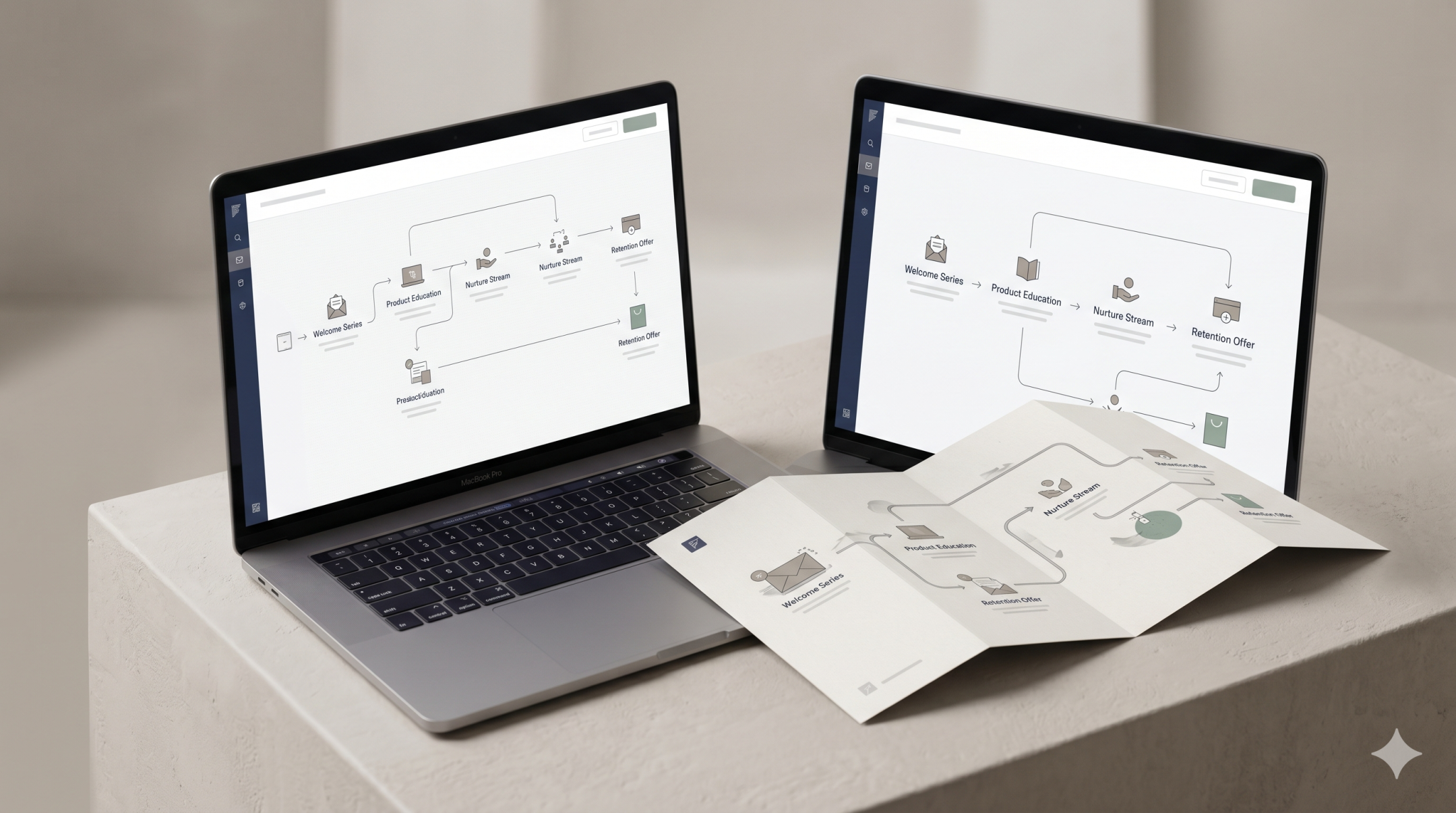
Welcome Stage
The welcome stage begins when someone first subscribes, creates an account or makes initial contact with the business. This is an early trust-building moment, and it often sets the tone for what follows.
At this stage, email should help people understand who the brand is, what they can expect and what to do next. That might include:
- a clear welcome message
- an introduction to the product, service or value proposition
- helpful onboarding content
- a next-step prompt such as browsing, booking or making a first purchase
The goal is not to overwhelm people with too much information at once. The goal is to reduce friction and create momentum. A strong welcome sequence makes the first interaction feel deliberate rather than accidental.
Engagement Stage
Once a person has entered the ecosystem, the next challenge is keeping them engaged. This stage is about building familiarity, interest and confidence.
Engagement emails may include educational content, product guidance, useful resources, updates or examples of how to get more value from the offering. In a service context, that could mean sharing insights, explaining processes or surfacing relevant expertise. In an ecommerce context, it could mean category education, product recommendations or usage tips.
A strong email lifecycle strategy at this stage avoids over-reliance on hard selling. It focuses on helping the customer move closer to action by making the brand more understandable and more relevant.
This stage matters because many leads and early customers do not convert immediately. They need a reason to stay interested, remember the brand and see its value more clearly over time.
Retention Stage
Retention is where lifecycle marketing becomes especially valuable. Many businesses focus heavily on acquisition but underinvest in the communication that keeps customers active after the first conversion.
Retention emails support repeat behaviour, stronger loyalty and better long-term value. They may include:
- post-purchase follow-up
- helpful usage or support content
- reminders tied to reorder cycles
- loyalty or referral prompts
- personalised recommendations
- updates that keep the brand top of mind
Good retention marketing is not just about asking for another sale. It is about continuing the relationship in a way that feels useful and well timed. Customers are more likely to stay engaged when the communication reflects what they have already done and what they may need next.
Re-Engagement Stage
Not every customer stays active. Some subscribers stop opening emails. Some buyers do not return. Some leads lose momentum before converting. That is where re-engagement becomes important.
Re-engagement emails are designed to reconnect with people who have become inactive. They should acknowledge that attention has dropped and provide a reason to return. That reason might be a helpful reminder, a new offer, updated content or a simpler next step.
The most effective re-engagement emails are focused and realistic. They do not try to restart the entire relationship in one message. Instead, they aim to reopen attention and test whether the contact is still relevant.
This stage is also useful for list quality. When people remain inactive for long periods, businesses may need to reduce frequency, adjust segmentation or remove inactive contacts altogether. Strong lifecycle marketing supports growth, but it also supports better communication discipline.
Common Lifecycle Marketing Mistakes
Many businesses talk about lifecycle marketing, but their execution is often partial or inconsistent. Common mistakes include:
Treating every subscriber the same
A single email calendar for every contact ignores stage, intent and history. This usually leads to generic messaging that feels disconnected from the customer journey.
Focusing only on acquisition
New leads often get the most attention, while existing customers receive very little structured communication. That weakens retention and limits long-term value.
Overusing promotions
Discount-led email can drive short-term action, but it does not build a full lifecycle. Without onboarding, education and retention touchpoints, communication becomes too transactional.
Ignoring behavioural signals
Opens, clicks, purchases, inactivity and page visits can all inform better timing and message selection. When these signals are ignored, lifecycle communication becomes much less relevant.
Building journeys that are too complex
Automation can easily become overengineered. If workflows are difficult to maintain, they often break down or become inconsistent. A practical structure is usually more valuable than an overly ambitious one.
Failing to connect email to the wider customer experience
Email should reflect the broader brand journey. If website experience, product experience and service communication feel disconnected from email, the lifecycle becomes fragmented.
What Better Lifecycle Execution Looks Like
Better lifecycle execution is usually more strategic, not just more automated. It starts with a clear understanding of the customer journey and the communication needs at each point.
A stronger approach often includes:
Clear stage definition
Businesses need a practical view of their lifecycle stages. That may include subscriber, lead, first-time customer, repeat customer and inactive contact. Without those distinctions, targeted communication becomes much harder.
Email journeys tied to real customer needs
Each sequence should have a purpose. A welcome flow should orient and guide. An engagement flow should build confidence and interest. A retention flow should support ongoing value. A re-engagement flow should reconnect or clean the list responsibly.
Consistent messaging logic
Customers should feel that communication progresses naturally. The next message should make sense based on the previous one and the customer’s actions. That is what makes customer lifecycle communication feel joined up rather than random.
Balanced use of automation and editorial planning
Automation handles timing well, but it should still sit within a wider content and communication strategy. Campaigns, newsletters and automated flows should support each other, not compete for attention.
Ongoing review and refinement
Lifecycle marketing is not something businesses set once and forget. Customer behaviour changes. Products evolve. sales cycles shift. Better email lifecycle strategy involves regular review of timing, content, segmentation and performance.
A mature lifecycle approach often looks quieter from the outside because it is more controlled. Fewer unnecessary messages are sent, but the messages that do go out are more useful and better placed.
FAQs
What is lifecycle marketing in simple terms?
Lifecycle marketing is a way of communicating with people based on where they are in their relationship with a business. It aims to make communication more timely, relevant and useful over time.
Why is email important in lifecycle marketing?
Email gives businesses a direct and flexible way to communicate at different customer stages. It supports onboarding, engagement, retention and re-engagement through both automated and planned messaging.
What is the difference between lifecycle email marketing and regular email campaigns?
Regular email campaigns are often broad and calendar-based. Lifecycle email marketing is structured around customer stage, behaviour and progression. It is designed to match communication more closely to customer needs.
How does lifecycle marketing support retention?
Lifecycle marketing supports retention by keeping communication relevant after the first conversion. It helps customers continue getting value, stay connected to the brand and return at the right moments.
Does lifecycle marketing only work for ecommerce brands?
No. It works across many business types, including service businesses, subscription models, B2B organisations and ecommerce. Any business with a customer journey can benefit from better lifecycle communication.
Final Thoughts
Lifecycle marketing gives businesses a more thoughtful way to communicate over time. Instead of treating email as a series of disconnected sends, it treats communication as part of customer development. That shift improves relevance, creates better timing and supports stronger long-term relationships.
Email is especially powerful in this context because it can guide, nurture, retain and reconnect people across the full customer lifecycle. When done well, it becomes more than a promotional channel. It becomes part of how the business supports growth.
If your current email activity feels reactive or too one-size-fits-all, it may be time to look at how lifecycle-based planning could make customer communication more useful, structured and effective.