Why Branding Is So Important in Cosmetics
Cosmetics is one of the most brand-sensitive categories in the market. Consumers are often choosing between products with similar functions, similar claims and similar price brackets. That means branding plays a major role in how products are understood and valued.
A strong cosmetic brand identity helps answer key questions quickly. What kind of brand is this? Who is it for? Does it feel premium, accessible, clinical, expressive or trend-led? Is it trustworthy? Does it feel current? These signals influence whether people stop, explore and buy.
Beauty branding also carries more emotional weight than many other sectors. People are not only buying a formula. They are buying presentation, confidence, self-image and brand world. If the identity feels generic or inconsistent, the product can feel weaker than it really is. If the branding feels clear and resolved, even a new or smaller brand can create strong market presence.
This is why cosmetics branding needs to do more than look attractive. It needs to position the brand clearly, shape perception and create consistency across every touchpoint.
What Consumers Notice First
Before consumers understand ingredients, performance or brand story, they respond to what is immediately visible and understandable. In cosmetics, first impressions are rarely neutral.
The first things people tend to notice include:
- the overall visual style
- the quality and coherence of the packaging
- the name and tone of the product line
- whether the brand feels premium, trend-led, clinical or mass-market
- how clearly the product purpose is communicated
- whether the brand seems distinct from its competitors
These first signals matter because beauty shopping often happens quickly. On shelf, in social content or on an ecommerce page, consumers make early judgments in seconds. If the branding does not communicate clearly at that moment, the product may be skipped before deeper consideration even begins.
Premium cosmetics branding often succeeds by combining restraint with clarity. It does not overload the consumer with cues. It gives them just enough to understand the product category, brand feel and value level at a glance.
The Building Blocks of Strong Cosmetics Branding
A distinctive cosmetics brand is usually built from several connected layers rather than one standout feature. A logo alone will not create premium perception. Nor will premium packaging if the tone of voice, product naming or online experience feels disconnected.
Visual Identity
Visual identity is often the first visible layer of cosmetics branding. It includes logo usage, typography, colour, layout style, photography direction, graphic assets and the broader aesthetic system that shapes the brand.
In beauty branding, visual identity needs to do several things well at once. It must feel attractive, coherent and relevant to the category, while also helping the brand stand apart. A premium cosmetics brand might use refined typography, controlled spacing and a more restrained palette. A youth-led beauty brand may rely on stronger contrast, more expressive colours or a more playful system. The right direction depends on positioning, not trend imitation.
Strong visual identity in cosmetics also needs to be scalable. It must work across cartons, labels, product shots, ecommerce pages, launch assets, paid ads and social content. If the identity only works in a presentation deck but breaks down across real-world applications, it is not yet strong enough.
Tone of Voice
Tone of voice is often underestimated in cosmetic brand identity, but it plays a direct role in how premium or generic a brand feels. The way a beauty brand writes product descriptions, campaign lines, landing pages and packaging copy shapes both trust and desirability.
A strong tone of voice helps define whether a brand feels expert, understated, luxurious, playful, bold or science-led. It also supports beauty positioning by making communication feel more ownable. Two brands may use similar colour palettes or product formats, but the one with clearer language often feels more distinctive.
The key is consistency. If packaging feels premium but website copy feels flat or overly promotional, the brand loses credibility. If social captions sound casual while product pages sound clinical, the experience becomes fragmented. Tone of voice should support the same brand world that the design system is trying to create.
Packaging Fit
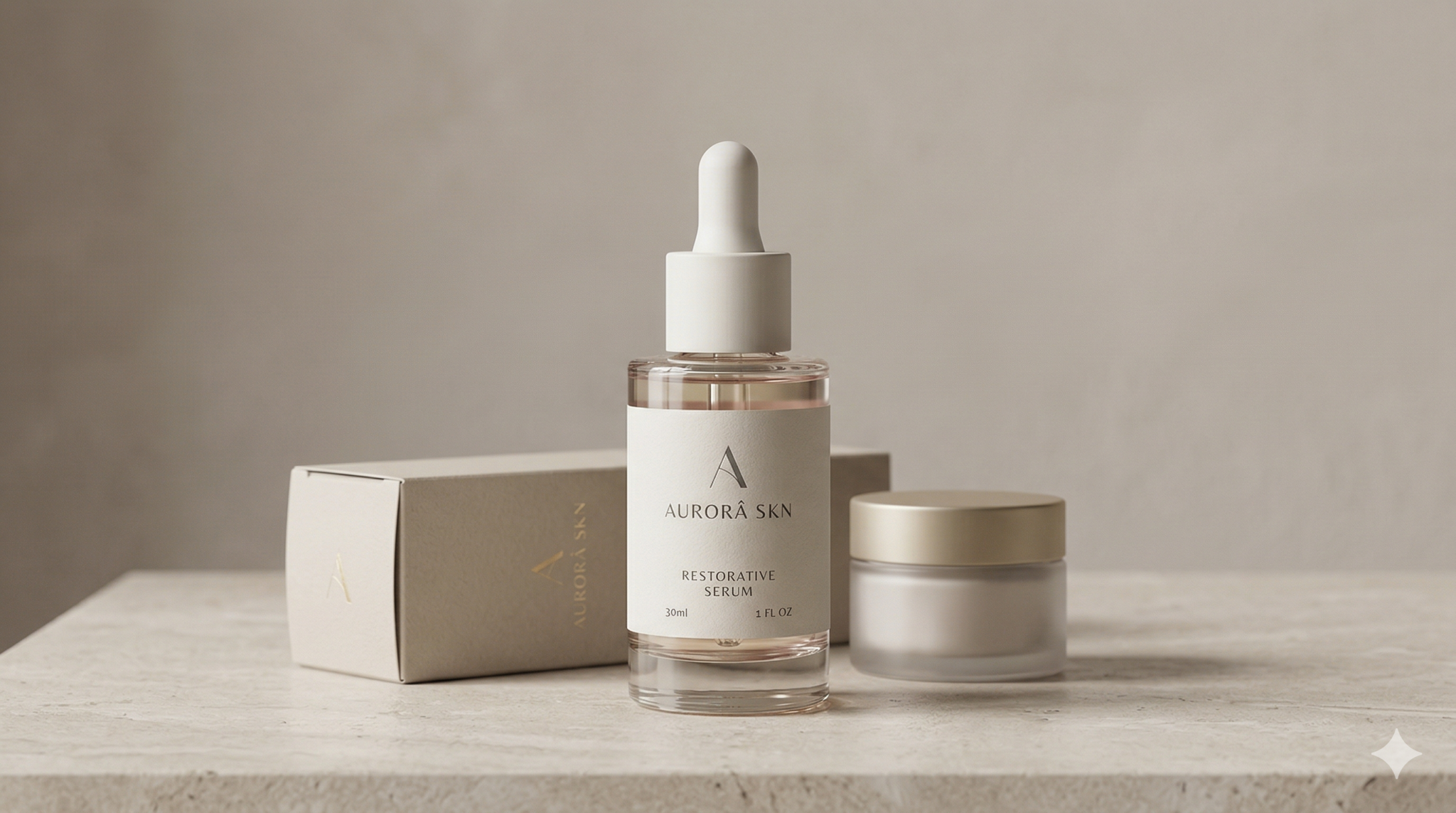
In cosmetics, packaging is not separate from branding. It is one of its most important expressions. It often carries the first physical interaction a customer has with the brand, and it strongly influences perceived quality.
Packaging fit means the packaging feels aligned with the brand’s positioning, audience and product promise. A premium serum brand should not feel visually or structurally careless. A minimalist skincare range should not create confusion with cluttered information or inconsistent naming. A high-end makeup line should not feel visually interchangeable with lower-cost competitors.
Good packaging fit also considers category behaviour. Cosmetics shoppers often compare products side by side. They want quick clarity on type, benefit and range logic. Premium does not mean vague. It means selective, intentional and well resolved. The most effective beauty packaging usually balances visual refinement with communication discipline.
Perceived Value
Perceived value is the result of branding done well. It is not just about price point. It is about whether the brand feels worth the attention, trust and spend it asks for.
In premium cosmetics branding, perceived value is created through many small signals working together. These include naming, materials, typography, hierarchy, tone of voice, photography, formulation language, ecommerce design and overall consistency. Consumers read these signals as indicators of product quality, even before direct use.
This is why cosmetic brands need to think beyond decoration. If the brand looks expensive but feels confusing, it loses value. If it looks clean but lacks distinction, it risks becoming forgettable. Strong perceived value comes from the balance of desirability, clarity and credibility.
Common Cosmetics Branding Mistakes
Many cosmetics brands struggle not because the product is weak, but because the brand execution does not support it properly. Common issues include:
Following category trends too closely
Beauty is trend-sensitive, which makes imitation tempting. But when a brand borrows too heavily from what is already popular, it becomes harder to distinguish. It may look current for a moment while weakening long-term recognition.
Confusing premium with minimal
Minimal branding can work well in cosmetics, but minimal does not automatically mean premium. If too much information is removed, the brand may feel empty rather than refined. Premium beauty branding still needs clarity, hierarchy and purpose.
Inconsistent execution across touchpoints
A brand may have attractive packaging but a weak website. Or a strong logo but unstructured social content. Or elegant campaign imagery paired with generic product copy. In cosmetics, inconsistency is easy to notice because the category is so visually competitive.
Weak positioning
Some brands look polished but still feel hard to place. They do not communicate clearly enough whether they are science-led, luxury, natural, expressive or results-focused. Without stronger beauty positioning, the brand may look good while remaining commercially vague.
Overdesigned packaging and messaging
Trying to communicate everything at once often damages premium perception. Too many claims, too many visual elements or too many competing messages can make a cosmetic product feel less confident. Strong brands know what to emphasise and what to leave out.
What Premium Brand Execution Looks Like
Premium cosmetics branding feels intentional from the first touchpoint to the last. It is coherent, recognisable and commercially aware. It does not rely on one attractive asset. It creates a full experience that feels aligned at every level.
In practice, stronger premium execution often includes:
- a clear beauty positioning that helps the brand occupy a distinct place in the market
- a visual identity system that feels ownable rather than interchangeable
- packaging that communicates product type and value without clutter
- a tone of voice that supports the same level of refinement as the visuals
- a website experience that continues the brand world rather than diluting it
- consistent hierarchy across product lines, launches and campaigns
- enough clarity for quick understanding without losing desirability
The strongest cosmetic brand identity systems are usually not the loudest. They are the most controlled. They know what they want to signal, who they are speaking to and how to create consistency across design, copy and product presentation.
For growing beauty brands, this level of execution is especially important. It helps products feel more established, supports premium pricing and creates stronger recognition over time.
FAQs
What is cosmetics branding?
Cosmetics branding is the way a beauty brand shapes perception through identity, messaging, packaging and digital experience. It defines how the brand looks, sounds and feels across customer touchpoints.
Why is branding important in the beauty industry?
Branding is important in beauty because products are often judged quickly and compared visually. Strong beauty branding helps consumers understand the brand, trust the product and perceive greater value.
What makes a cosmetics brand feel premium?
A cosmetics brand feels premium when its visual identity, tone of voice, packaging and digital presence all feel coherent, intentional and well executed. Premium perception usually comes from consistency and detail rather than decoration alone.
How does packaging affect cosmetics branding?
Packaging is one of the strongest expressions of cosmetic brand identity. It shapes first impressions, supports product clarity and influences how premium or credible the brand feels.
What is the difference between cosmetics branding and packaging design?
Cosmetics branding is the wider system that defines the brand’s identity and positioning. Packaging design is one part of that system. It should reflect the broader brand rather than operate as a separate visual decision.
Final Thoughts
Cosmetics branding works best when it brings together desirability, clarity and distinction. In a crowded market, looking polished is not enough. Brands need to feel recognisable, relevant and consistent across every point of contact.
The beauty brands that stand out over time are usually the ones with stronger foundations. They know how to express premium value without losing clarity, and how to build a brand world that carries through packaging, messaging and digital experience in a unified way.
If your cosmetics brand needs a stronger identity, clearer positioning or more coherent execution across packaging and digital touchpoints, Fact & Form can help shape a brand that feels premium, distinctive and commercially stronger.