Why Branding Matters So Much in FMCG
FMCG branding operates in one of the most competitive brand environments there is. Products are often placed side by side with direct alternatives, private label options and established category leaders. In that setting, branding is not a surface layer. It is a core commercial tool.
A strong FMCG brand helps shoppers understand what the product is, who it is for and why it feels worth choosing. It supports recognition, trust and repeat purchase. It also helps a product stand out without becoming confusing or overdesigned.
Unlike slower, more considered purchase categories, FMCG buying behaviour is often driven by speed, familiarity and visual shorthand. Consumers are not always reading deeply. They are scanning. That means the brand has to communicate quickly and clearly.
Effective FMCG branding supports:
- faster recognition on shelf
- clearer category positioning
- stronger product differentiation
- improved recall between purchases
- better consistency across packs, formats and channels
When those things are weak, even a good product can feel harder to choose.
What Makes FMCG Brands Different
FMCG brands work under different pressures than many service or premium B2B brands. The buying environment is faster, the competition is more visible and the decision window is shorter.
The first difference is speed. A shopper may only give a pack a brief glance before moving on. Branding has to do more with less time.
The second is repetition. FMCG brands often rely on repeat purchase, which means memorability matters. A product should not only attract first attention but also stay recognisable the next time someone sees it.
The third is shelf context. An FMCG product does not appear in isolation. It appears next to other colours, claims, shapes and category codes. Branding must work in context, not just in presentation decks or mockups.
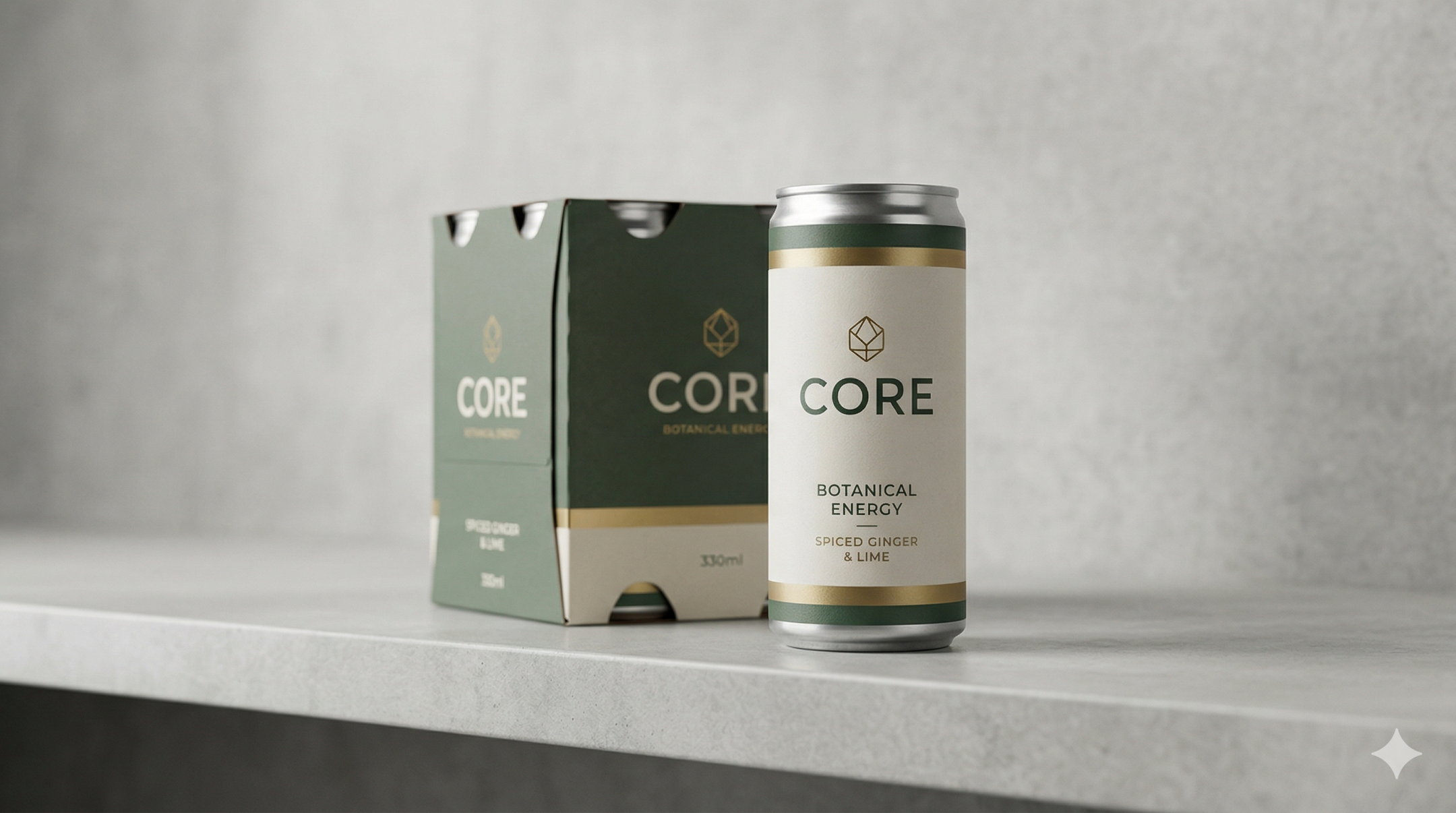
The fourth is packaging dependence. In many FMCG categories, the pack is the brand experience. It is often the first and most frequent touchpoint. That makes FMCG packaging branding especially important because identity, communication and product perception are tightly connected.
This is why FMCG brand strategy has to be practical. It must consider category norms, shopper behaviour, retail realities and how quickly people form impressions.
The Core Components of Strong FMCG Branding
Strong FMCG branding is usually built on a small number of things done very well. It does not need to be visually loud or conceptually complicated. It needs to be clear, distinctive and easy to recognise under pressure.
Positioning
Positioning gives the brand its place in the market. It answers basic but essential questions. What kind of product is this? Who is it for? What makes it different? Why should someone notice it?
In FMCG, weak positioning often leads to vague branding. The product may look acceptable, but it feels generic because nothing about it signals a clear role or audience. It blends into the category instead of holding a defined space within it.
Strong consumer brand positioning helps shape every visible decision. It influences tone, claims, pack hierarchy, naming logic and visual expression. A family-focused everyday product should not speak like a niche premium innovation brand. A functional health-led product should not look unclear or overly decorative.
Positioning is what helps branding feel intentional rather than assembled.
Visual Clarity
Visual clarity is one of the most important parts of FMCG branding because shoppers do not decode packs patiently. They scan for cues.
Good visual clarity means the most important information is easy to identify quickly. Brand name, product type, variant and key point of difference should not compete equally for attention. There should be a clear visual hierarchy.
Clarity also means restraint. Too many competing colours, claims, icons or type styles can make a product harder to read. In an effort to say more, brands often end up communicating less.
Clear FMCG branding tends to have:
- a strong and readable hierarchy
- clear separation between brand and product information
- controlled use of visual assets
- recognisable design codes
- consistent application across formats and SKUs
This is not about making packaging minimal for its own sake. It is about making key messages easier to absorb.
Packaging Fit
In FMCG, branding and packaging are deeply connected. The identity has to fit the pack format, the category and the retail environment. A brand system that looks good on screen but breaks down across labels, cartons or multipacks is not commercially strong.
Packaging fit means the branding works where it actually needs to work. It suits the product form, supports information needs and stays consistent across a product range. It also respects the visual language of the category while still creating distinction.
For example, shoppers still rely on familiar cues. In food, beverage, personal care and household categories, people expect certain types of signals. Brand systems should use those signals intelligently, not ignore them completely. The goal is usually not to look unrelated to the category. It is to look more relevant, more coherent and more ownable within it.
This is where FMCG packaging branding becomes especially valuable. It connects brand strategy to real-world execution in a way consumers can understand immediately.
Recognition at Speed
Recognition at speed is what turns a brand from visible into memorable. It is also what supports repeat purchase. If consumers cannot quickly identify the product next time, the brand is doing extra work every time it appears.
Fast recognition comes from repeated, consistent signals. This may include distinctive colour use, pack architecture, logo placement, typography, structure or recurring graphic assets. The point is not to rely on one device alone. It is to build a set of cues that work together.
Brands become easier to recognise when:
- their most distinctive elements are used consistently
- their pack system holds together across variants
- their core brand signals are not diluted by constant redesign
- they make decision-making easier rather than more complex
Shelf competition branding is often won through this kind of disciplined consistency. Many strong FMCG brands do not shout the loudest. They simply make recognition easier.
Common FMCG Branding Mistakes
A lot of FMCG branding problems come from trying to solve the wrong issue. Teams often focus on making the pack feel more attractive when the real problem is that the brand is unclear, inconsistent or weakly positioned.
One common mistake is trying to say everything at once. Too many claims, benefits and visual elements create noise. Instead of helping consumers decide, the branding asks them to work harder.
Another mistake is weak differentiation. Some products look so close to competitors that they become forgettable. Others try to avoid category conventions so completely that they stop looking relevant. Both extremes can hurt performance.
A third issue is inconsistency across product lines. If pack formats, variants or sub-ranges all behave differently, the brand loses recognition. Consumers may not realise products belong to the same family, which weakens overall brand equity.
There is also the problem of overdesigned branding. In FMCG, sophistication is not the same as complexity. A pack can look polished and premium while still being easy to read. When aesthetics overpower communication, performance often suffers.
Other common mistakes include:
- unclear product naming
- weak hierarchy between brand and variant
- poor fit between positioning and visual expression
- inconsistent use of colour, structure or typography
- branding that looks good in isolation but not on shelf
These issues are rarely solved by surface updates alone. They usually require sharper strategic and structural thinking.
What Stronger Execution Looks Like
Stronger FMCG branding feels intentional from first glance. It gives the shopper enough information to understand the product quickly, while also creating a distinct impression that can be remembered later.
In practice, stronger execution usually includes a clearer market position, a more disciplined visual system and better alignment between brand identity and packaging. The brand knows what it wants to signal and avoids diluting that message with unnecessary detail.
It also performs consistently across touchpoints. The front of pack, range architecture, secondary packaging and digital product listings all feel connected. That consistency helps reinforce trust and recognition over time.
A well-executed FMCG brand often has these characteristics:
- a clear role within the category
- strong visual hierarchy
- recognisable assets used consistently
- packaging that reflects the brand strategy rather than fighting it
- enough distinction to stand apart without losing category relevance
This is what makes a brand feel shelf-ready. Not because it is louder, but because it is easier to understand, easier to remember and easier to choose.
FAQs
What is FMCG branding?
FMCG branding is the strategic and visual development of brands in fast-moving consumer goods categories. It includes positioning, identity, packaging expression and recognition systems that help products compete in fast, crowded retail environments.
Why is branding so important in FMCG?
Branding matters in FMCG because consumers often make decisions quickly and compare products directly on shelf. Strong branding helps a product feel clearer, more trustworthy and easier to recognise at speed.
How is FMCG branding different from other types of branding?
FMCG branding works under greater pressure from shelf competition, short attention spans and repeat purchase behaviour. It usually needs to communicate faster and rely more heavily on packaging as a core brand touchpoint.
What role does packaging play in FMCG branding?
Packaging is often the main expression of the brand in FMCG. It carries the identity, product communication and recognition cues that shape first impressions and support repeat buying.
What makes FMCG branding memorable?
Memorable FMCG branding usually combines clear positioning, strong visual consistency and distinctive assets that are easy to recognise across packs and formats. Simplicity and repetition often matter more than novelty.
Final Thoughts
FMCG branding succeeds when it makes choice easier. In a category shaped by speed, repetition and visible competition, brands need more than attractive design. They need positioning that is clear, packaging that fits the product and recognition systems that hold together across real retail conditions.
When those foundations are strong, branding becomes more than decoration. It becomes a practical advantage on shelf and a stronger basis for long-term consumer recognition.
If your brand needs to work harder in fast, competitive consumer environments, a clearer branding and packaging approach can help turn good products into more recognisable, commercially effective ones.