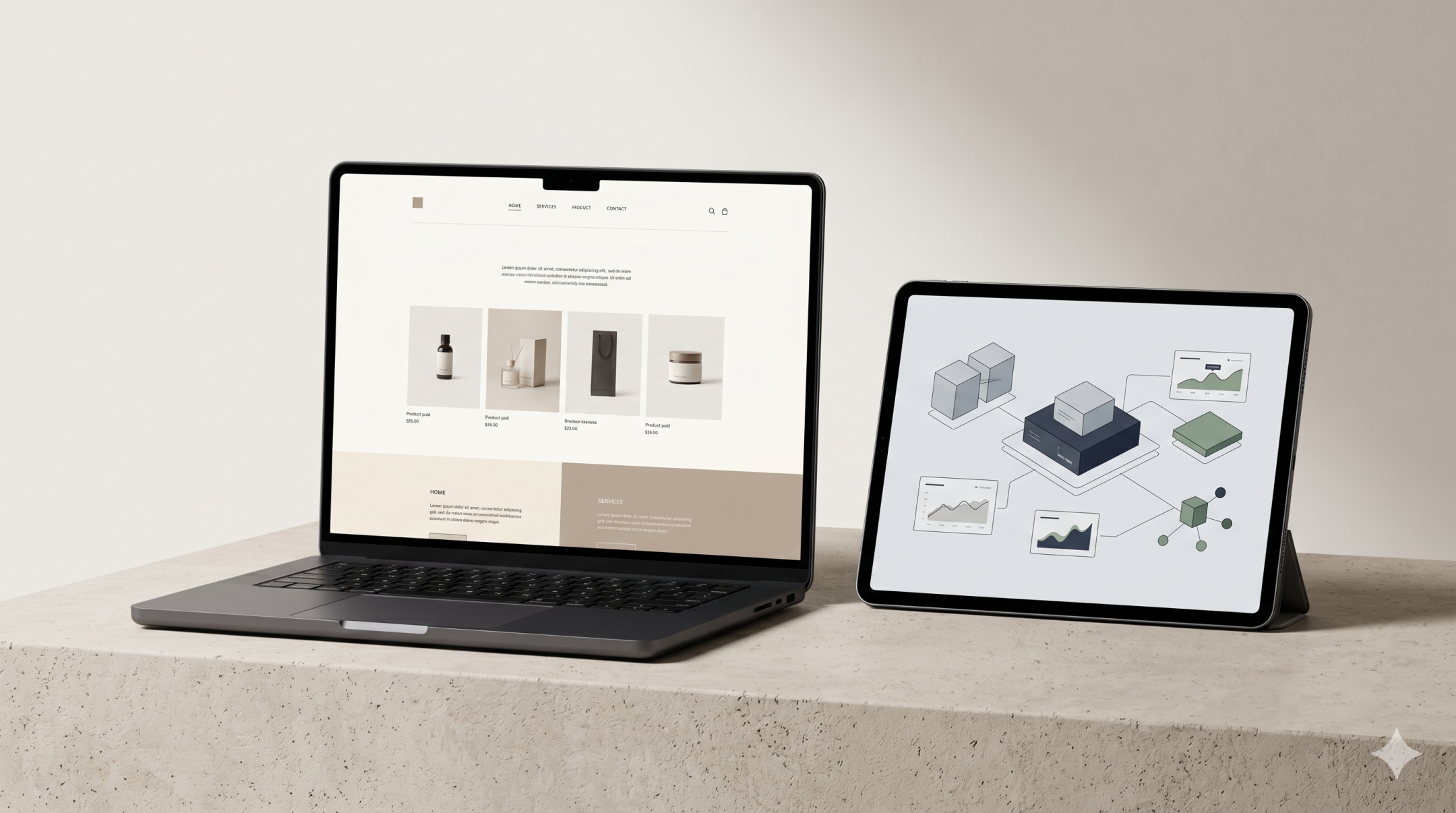
Why This Difference Matters in Real Projects
In real projects, confusion between frontend development and backend development often leads to unrealistic expectations. A client may focus heavily on how a website should look, without realising that the visible interface depends on logic, content structure, databases and system behaviour behind the scenes.
This difference matters because strong digital work is not only about appearance. A well-designed website can still fail if forms do not work, content is hard to manage, product data is unreliable or performance is poor. In the same way, a technically solid platform can still underperform if the interface feels confusing or difficult to use.
For clients, knowing the difference between frontend and backend development helps with:
- defining project scope more accurately
- understanding what affects cost and timing
- planning content and functionality more realistically
- improving communication with designers and developers
- making better decisions about CMS, e-commerce or custom features
Put simply, frontend and backend are two sides of the same web product. One shapes what users experience directly. The other powers what makes that experience possible.
What Frontend Development Covers
Frontend development is the part of web development that users see and interact with in the browser. It turns design concepts, layouts and interface elements into a live digital experience.
This includes things like:
- page layouts
- navigation menus
- buttons and forms
- typography and spacing
- animations and transitions
- mobile responsiveness
- interactive components
If a user visits a homepage, reads service pages, fills out a contact form or browses products, they are engaging with the frontend.
From a client perspective, frontend development is where brand presentation and usability become real. It affects whether a site feels modern, clear, trustworthy and easy to use. It is closely connected to UX and UI design, but it is not the same thing. Design defines how the interface should look and behave. Frontend development builds it so that it works in practice.
Good frontend development should support:
- a smooth user journey
- clear visual hierarchy
- responsive behaviour across devices
- accessible interaction patterns
- fast and stable page rendering
This is why frontend development matters beyond aesthetics. It directly influences how people experience the business online.
What Backend Development Covers
Backend development is the part users do not usually see, but it is essential to how the website or platform functions. It handles the systems, processes and logic behind the interface.
This often includes:
- server-side logic
- databases
- user accounts and permissions
- content management structure
- form processing
- product and order management
- integrations with third-party tools
- security and data flow
If the frontend is what users interact with, the backend is what responds to those interactions and makes them meaningful.
For example, when someone submits a form, signs into an account, filters products, updates content in a CMS or completes a checkout, backend development is involved. It manages how information is stored, processed and delivered.
From a business point of view, backend development often has a major impact on:
- flexibility
- scalability
- content management
- technical reliability
- system integrations
- long-term maintenance
This is especially important in projects involving custom CMS setups, e-commerce functionality, booking systems, member areas or complex workflows. A polished interface alone cannot support these features without a well-planned backend.
How Frontend and Backend Work Together
Frontend and backend development are not separate worlds. They work together constantly. The value of a digital product usually depends on how well these two sides connect.
User Experience
A user experience only feels smooth when frontend and backend are aligned. A clear interface is important, but the experience breaks down quickly if the system behind it is slow, inconsistent or unreliable.
For example, a clean contact form on the frontend means little if submissions fail in the backend. A beautifully structured product page loses value if stock availability or pricing data is inaccurate. Good UX depends on both visible clarity and invisible reliability.
Functionality
Most useful website features depend on cooperation between frontend and backend development.
Take a simple example such as a filtered service directory or product listing. The frontend presents the filter options and results layout. The backend processes the logic, retrieves the right data and sends it back correctly. Without both parts working together, the feature does not function properly.
This is why functionality should never be treated as a purely technical add-on. It affects the entire user experience.
Data Handling
Data handling sits mainly in the backend, but it directly shapes what appears on the frontend. Content, product details, blog posts, account information and search results all rely on structured data behind the scenes.
Clients often see this most clearly in CMS development. The frontend may show elegant page designs, but the backend determines whether the editing experience is flexible, sensible and easy for the internal team to use.
Strong projects usually treat data structure as an early planning priority, not an afterthought.
Performance
Performance is another shared responsibility. Users experience speed on the frontend, but many performance issues start in the backend through inefficient logic, heavy queries or poor system architecture.
Equally, frontend choices such as overly heavy scripts, unoptimised assets or cluttered interaction layers can also slow the experience down.
From a client perspective, this is important because performance should not be viewed as a single design or development task. It is a cross-functional outcome that depends on how well the whole build is planned.
What Clients Usually Need to Understand Before Starting
Most clients do not need to understand code. What they do need is a practical understanding of what kind of project they are actually commissioning.
Before starting, it helps to be clear on a few things.
First, not every website needs deep backend complexity. A smaller brochure-style website may rely far more on frontend execution and a manageable CMS setup than on custom backend engineering.
Second, more advanced features usually increase backend requirements. User accounts, dashboards, booking systems, e-commerce functionality, content workflows and third-party integrations all need thoughtful backend planning.
Third, frontend decisions should not be made in isolation. Layouts, interactions and content components often depend on what the backend can support cleanly and efficiently.
Fourth, content management matters more than many clients expect. If the website needs to grow over time, the backend and CMS structure should support internal teams, not just launch-day requirements.
Finally, full-stack development simply refers to work that covers both frontend and backend. For clients, this is useful to know because many projects are not purely one or the other. Most successful digital builds require collaboration across both sides.
A helpful way to think about it is this:
- frontend development shapes the experience
- backend development powers the system
- full-stack development connects both into one working product
FAQs
What is the main difference between frontend and backend development?
Frontend development covers what users see and interact with. Backend development covers the systems, logic and data processing that make those interactions work.
Do clients need both frontend and backend development for every website?
Not always at the same level. Simpler websites may rely more on frontend work and a standard CMS setup. More complex websites usually need stronger backend planning as well.
Is frontend development just design?
No. Design defines the visual and user experience direction, while frontend development builds that design into a working interface in the browser.
Is backend development only relevant for large websites?
No. Even relatively simple websites often use backend development for form handling, CMS functionality, hosting logic and content delivery. Larger or more feature-rich websites simply depend on it more heavily.
What is full-stack development?
Full-stack development refers to work across both frontend and backend. In practice, it means building both the user-facing interface and the underlying system logic.
Why should clients understand frontend vs backend development?
Because it helps them scope projects better, communicate more clearly and make smarter decisions about features, timelines and platform needs.
Final Thoughts
The difference between frontend and backend development is not just technical terminology. It affects how digital projects are planned, built and managed.
For clients, the most useful takeaway is simple. Frontend development is about the experience people see and use. Backend development is about the systems that make that experience work. Both are essential, and most successful projects depend on the strength of both.
A clearer understanding at the start usually leads to better conversations, better planning and better outcomes.
If you are reviewing a new website, CMS or e-commerce project, it helps to define early what needs to happen on the frontend, what needs to happen on the backend and how both should support the wider business goal.