Why This Confusion Happens So Often
The confusion usually starts because the logo is the most visible part of a brand. It is the asset people notice first, the file businesses ask for most often and the piece many teams think of when they say they need branding.
In practice, that creates a narrow view of what branding basics really involve. A business may invest in a logo design, receive a set of files and assume the brand is complete. But once the brand starts appearing on a website, brochure, social post, presentation or packaging range, the gaps become obvious.
A logo on its own cannot define typography choices, image style, colour balance, layout behaviour or how visual elements should work together. It identifies the brand, but it does not build the full visual language around it.
What a Logo Actually Does
A logo is a distinctive visual mark used to identify a business, product or organisation. It may be a wordmark, symbol, monogram or combination of these elements.
Its role is important, but limited.
A logo helps with:
- recognition
- recall
- identification
- consistency of signature across touchpoints
A strong logo design should be clear, appropriate and usable across different sizes and formats. It should work on a website header, product label, document footer or social profile without losing legibility or character.
What it does not do is carry the entire brand on its own.
A logo cannot decide how headlines should look, how imagery should feel, how layouts should be structured or how a brand should stay visually consistent across dozens of applications. It is a core asset, but it is still only one asset.
What Brand Identity Includes
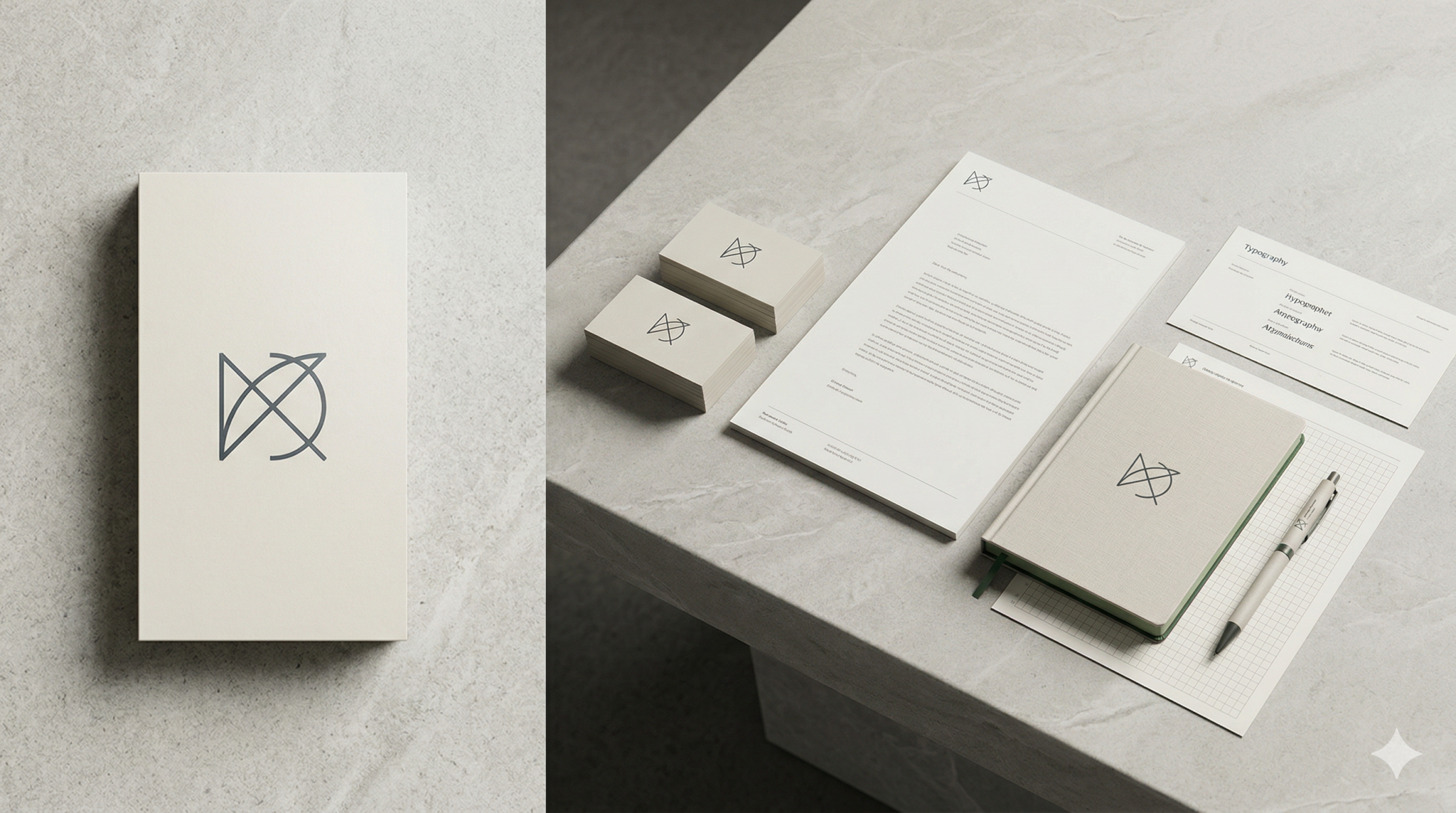
Brand identity is the broader visual system a business uses to present itself consistently. It includes the logo, but it also includes the surrounding rules, assets and decisions that make the brand feel coherent in real use.
Core visual elements
A full brand identity often includes:
- logo suite and usage variations
- colour palette
- typography system
- graphic devices or patterns
- icon style
- photography or illustration direction
- layout principles
- digital and print application examples
These elements help create a recognisable visual identity rather than leaving every design decision to chance.
Rules, consistency and application
A brand identity also includes guidance on how those elements should be used. This is often where the real value lies. Without rules, even well-designed assets can quickly become inconsistent.
A usable identity system helps answer questions like:
- Which logo version should appear where?
- What colours should lead and which should support?
- What type hierarchy should be used?
- How should social graphics, presentations or stationery look?
- How should the brand stay recognisable across different channels?
That is what turns isolated design assets into a functional brand guide.
Why Businesses Need More Than a Logo
Many businesses begin with a logo because it feels like the most urgent need. That is understandable. But as soon as the business grows, communicates more frequently or adds more brand touchpoints, a standalone logo starts to show its limits.
A business usually needs more than a logo when it is:
- launching across multiple channels
- building a website
- creating regular marketing materials
- producing packaging or printed assets
- working with multiple designers or teams
- trying to look more credible and established
Without a fuller identity system, visual execution often becomes inconsistent. Colours shift. Fonts change. Social posts feel disconnected from the website. Sales materials look unrelated to product materials. The brand becomes harder to recognise because it appears differently each time.
That inconsistency weakens trust and makes the business look less established than it really is.
By contrast, a stronger identity system helps create a more stable impression. It gives the business a visual structure that can be repeated, adapted and maintained without losing clarity.
How Identity Systems Support Consistency
Consistency is one of the biggest advantages of a proper brand identity. Not because everything should look identical, but because everything should feel like it belongs to the same brand.
A good identity system supports consistency by creating shared rules for how the brand appears in real contexts. That includes:
- websites
- presentations
- proposals
- social media
- packaging
- advertising
- internal documents
- branded templates and assets
This matters both externally and internally. Externally, consistency improves recognition and strengthens the impression of professionalism. Internally, it makes execution faster and easier because teams are not reinventing the brand every time they create something new.
It also creates flexibility. A strong visual identity is not rigid. It gives enough structure to stay recognisable, while allowing enough range to work across different formats and campaign needs.
That is the difference between a brand that looks assembled piece by piece and one that feels intentional from the start.
FAQs
Is a logo part of brand identity?
Yes. A logo is one part of a brand identity. It is usually the central identifying mark, but it sits within a wider visual system.
Can a business start with just a logo?
Yes, but it often becomes limiting quite quickly. A logo can be a starting point, but most growing businesses will eventually need a fuller identity system to stay consistent across touchpoints.
What is the difference between brand identity vs logo in simple terms?
A logo is the mark people recognise. A brand identity is the full set of visual elements and rules that shape how the brand appears everywhere else.
Does every small business need a full brand identity?
Not every business needs a highly complex system from day one, but most benefit from more than a logo alone. Even a simple identity system with core colours, typography and usage guidance can improve consistency significantly.
Is visual identity the same as brand identity?
Visual identity is often used to describe the visual part of brand identity. In many cases, the terms overlap. Brand identity can sometimes be used more broadly, while visual identity focuses specifically on how the brand looks.
Final Thoughts
A logo matters, but it is not the whole brand. It is one visible part of a much larger system.
When businesses treat logo design as the complete answer, they often end up with inconsistent execution, fragmented materials and a weaker overall presence. When they invest in a fuller brand identity, they gain more than aesthetics. They gain structure, consistency and a stronger foundation for growth.
If your business has a logo but still feels visually inconsistent, it may be time to think beyond the standalone mark and build an identity system that works properly across every touchpoint.
If you are reviewing how your brand shows up across digital, print and day-to-day assets, this is often the right moment to move from a logo alone to a more complete and usable identity system.