What Packaging Guidelines Are
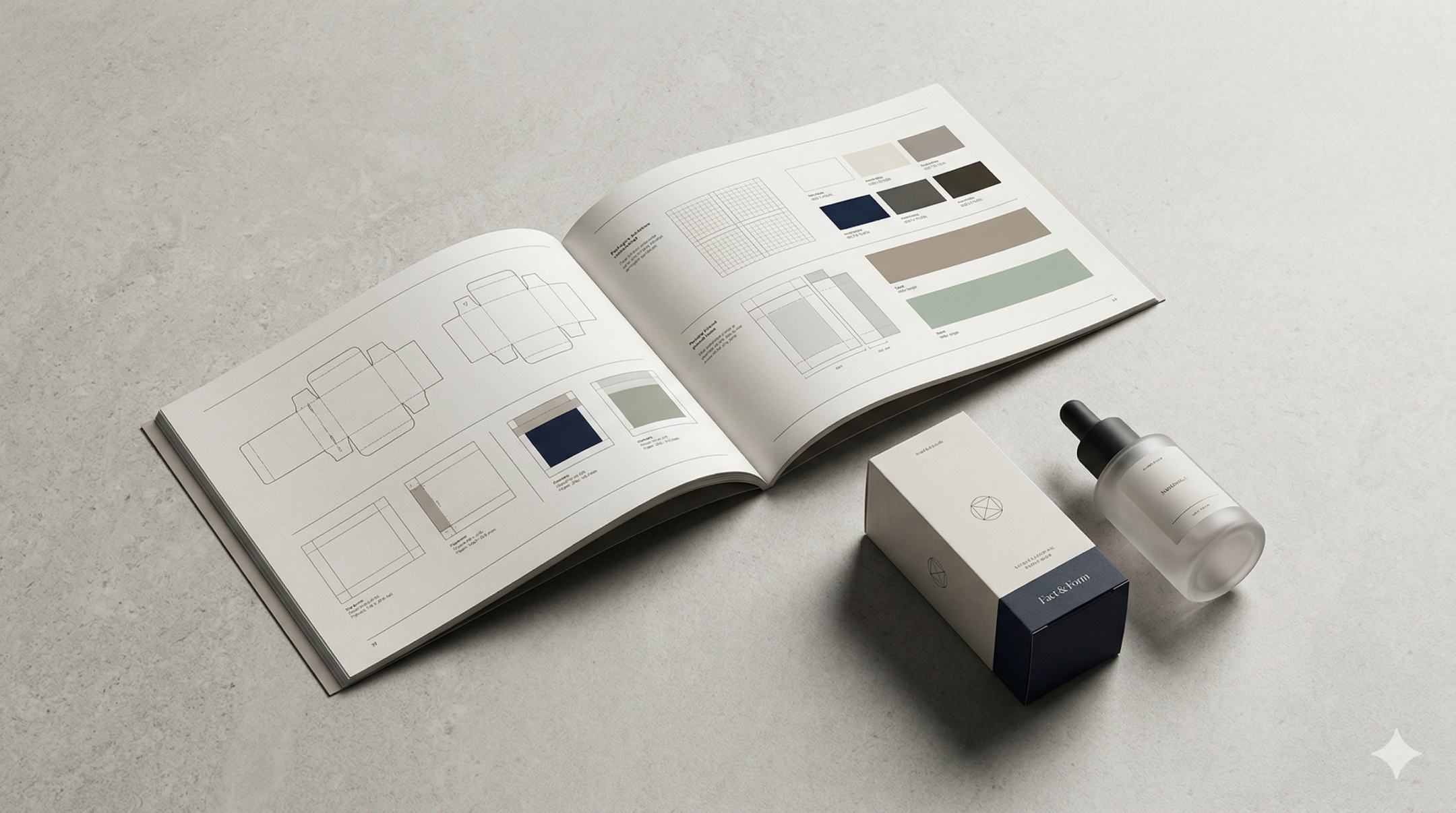
Packaging guidelines are a set of rules that define how a brand’s packaging should work across products, formats and variants. They go beyond showing what one pack looks like. Their role is to explain how packaging should be built, repeated and adapted over time.
In practical terms, packaging design guidelines help teams answer questions such as:
- Where should the logo appear?
- How should product names be structured?
- What information needs to come first?
- Which colours belong to which variants?
- How should packs stay recognisable across different sizes or formats?
This is why packaging guidelines matter so much in real businesses. Packaging is rarely static. New SKUs get added, regulations change, claims evolve, new retailers appear and production realities shift. Without a clear set of packaging standards, consistency quickly starts to break down.
Strong guidelines act as a working tool for designers, brand teams, packaging suppliers and marketing teams. They make packaging easier to manage because key decisions have already been defined.
Why Packaging Needs Rules, Not Just Design Decisions
A packaging concept may look excellent in a presentation, but real-world packaging has to survive scale, repetition and adaptation. That is where rules become more valuable than isolated design decisions.
A single design solution can work well for one product. A packaging system needs to work across many products, many touchpoints and often many people. Without brand packaging rules, every future execution becomes open to interpretation. That usually leads to inconsistency.
Packaging needs rules because it is expected to do several jobs at once. It has to support recognition, communicate product information, maintain brand character and stay usable across a range of pack sizes or product variants. These tasks require structure, not just taste.
Rules also reduce friction. Instead of debating every detail each time a new product is launched, teams can work from an agreed framework. That speeds up design, approval and production while protecting packaging consistency.
This matters even more when:
- a business has multiple SKUs
- products are sold in different channels
- external teams or suppliers are involved
- new variants are launched regularly
- packaging must stay aligned with wider brand identity
In these situations, packaging guidelines stop the brand from becoming diluted through small inconsistencies that accumulate over time.
What Good Packaging Guidelines Usually Include
Good packaging guidelines should be clear enough to guide future execution and flexible enough to work across a real product range. They should not be vague visual preferences. They should define how the packaging system behaves.
Layout Rules
Layout rules explain how the main elements of the pack are organised. This often includes the placement and scale of the logo, product name, variant descriptor, supporting claims, icons and regulatory information.
The goal is not to make every pack identical. It is to create a reliable visual structure. When layout rules are well defined, packs feel related even when content changes.
Useful layout guidance often covers:
- logo position and minimum clear space
- hierarchy between brand name and product name
- placement of key claims or benefits
- front-of-pack and back-of-pack zones
- alignment principles and spacing rules
These standards help stop packaging from drifting every time a new product is added.
Typography and Colour
Typography and colour are some of the fastest ways to create familiarity across a packaging range, but they are also some of the easiest areas to misuse without rules.
Good packaging guidelines define which typefaces should be used, where they should be used and how they should behave across headings, body copy, claims and technical information. This helps maintain clarity while also protecting the tone of the brand.
Colour rules are equally important. They may define core brand colours, background treatments, accent colours and approved variant colours. Without these rules, colour choices can become inconsistent or too subjective, especially when ranges grow.
Strong typography and colour guidance supports packaging consistency by making sure every product still feels part of the same family.
Product Information Standards
One of the most important jobs of packaging is communication. That means packaging guidelines should define how product information is prioritised, written and displayed.
This can include:
- naming conventions
- product descriptors
- hierarchy of benefits and claims
- mandatory legal information
- ingredient or specification formatting
- icon use
- measurement and sizing language
Without product information standards, packaging can easily become confusing. One product may lead with a functional claim, another may lead with a category label and another may bury the most useful information entirely. Even if the design looks attractive, the communication becomes unreliable.
Good packaging design guidelines make sure customers can find and understand key information quickly, especially across a broader product line.
Variant Logic
Variant logic is where many packaging systems either become very strong or start to fall apart. When brands add flavours, sizes, product types or functional differences, they need a clear logic for how those distinctions are expressed.
That logic might be based on colour, pattern, label blocks, naming structure or a combination of these. The important thing is that the system is consistent and easy to follow.
For example, a brand may decide that:
- colour identifies flavour
- a label band identifies product category
- icons identify format or usage type
- descriptor hierarchy stays consistent across all variants
When variant logic is clearly defined, the range becomes easier to navigate for both internal teams and customers. When it is not, every new addition risks feeling disconnected.
What Happens Without Packaging Guidelines
Without packaging guidelines, even good packaging design tends to weaken over time. The problem is usually not one major mistake. It is a series of small inconsistencies that build up with each new launch, update or adaptation.
Common issues include:
- logos appearing at different sizes or in different positions
- product naming shifting across SKUs
- inconsistent use of colour and typography
- unclear information hierarchy
- variant ranges that feel unrelated
- packaging updates that no longer match the original brand direction
This creates practical and commercial problems. Internally, teams spend more time making avoidable decisions. Externally, the brand starts to look less controlled and less recognisable. Customers may not consciously identify the cause, but they often notice the result. The packaging feels fragmented, less trustworthy or harder to understand.
A lack of packaging standards also makes future growth harder. Every new product becomes a partial redesign rather than a controlled extension of an existing system. That slows down execution and increases the chance of inconsistency across the range.
How Better Rules Improve Long-Term Execution
Better rules make packaging easier to scale, easier to brief and easier to protect over time. They give teams a repeatable foundation rather than a series of isolated design decisions.
This improves long-term execution in several ways.
First, it supports brand recognition. When packs follow a clear system, they become easier to recognise across a shelf, website or product family.
Second, it improves clarity. Customers can navigate product ranges more easily when information hierarchy and variant logic are consistent.
Third, it reduces internal inefficiency. Designers, marketers and production teams can work faster when the system is already defined.
Fourth, it makes future launches smoother. New products can be added within a framework rather than reinvented each time.
Finally, it protects the value of the original design work. Strong packaging should not depend on the memory of the people who created it. It should be documented well enough to survive team changes, supplier changes and business growth.
In that sense, packaging guidelines are not a restrictive document. They are what allow packaging to remain coherent while still adapting to real-world needs.
FAQs
What are packaging guidelines?
Packaging guidelines are documented rules that define how packaging should be designed and applied across a brand. They cover areas such as layout, typography, colour, product information and variant structure to support consistency over time.
Why are packaging guidelines important?
They help brands maintain packaging consistency across products, teams and formats. They also reduce confusion, improve efficiency and make future packaging updates easier to manage.
Are packaging guidelines the same as brand guidelines?
Not exactly. Brand guidelines usually cover the wider identity system, such as logos, colours, typography and tone of voice. Packaging guidelines focus specifically on how those brand rules are applied to product packaging, often with additional standards for product information and variant logic.
When does a business need packaging design guidelines?
A business usually needs packaging design guidelines when it has more than one product, plans to expand its range, works with multiple teams or wants to keep packaging consistent across channels and future launches.
What should packaging standards include?
At a minimum, packaging standards should include layout rules, typography and colour use, product information hierarchy and variant logic. In some cases, they may also include print considerations, material notes and application examples.
Final Thoughts
Attractive packaging can help a product get noticed, but good looks alone are not enough to support a growing brand. Over time, packaging needs structure, clarity and repeatable rules to stay effective.
That is why packaging guidelines matter. They turn design into a system that can be managed, scaled and applied consistently across real products and real business needs.
If your packaging range is growing or starting to feel inconsistent, it may be time to move beyond individual pack designs and build a clearer packaging system that is easier to manage and maintain over time.