What Print-Ready Packaging Actually Means
Print-ready packaging means the artwork has been prepared in a way that allows production to begin without avoidable technical issues or missing information. It is not only about whether the file opens correctly. It is about whether the packaging artwork is accurate, complete and properly aligned with the production method.
In practice, print-ready packaging usually means the file includes the correct document setup, correct dimensions, approved artwork, suitable colour settings, production marks where needed, and final content that has already been reviewed by the relevant teams.
This is why print-ready artwork should never be treated as an afterthought. Packaging often carries brand identity, product claims, usage instructions, ingredient details, legal information and shelf communication all in one place. Once the file goes into production, even a small mistake can become a large operational problem.
Why Pre-Production Accuracy Matters
Pre-production accuracy matters because packaging is one of the few brand assets that must work visually, practically and technically at the same time. It needs to look right, print correctly, fit the pack structure and communicate clearly under real-world conditions.
When packaging production files are not properly checked, common issues include:
- blurred or low-resolution print output
- incorrect colours compared to approved designs
- cut-off content caused by poor bleed or trim setup
- misaligned artwork on the final pack
- wrong barcode placement or poor scanability
- missing or inaccurate legal information
- costly revisions after files have already entered production
These are not minor finishing problems. They affect timelines, cost, quality and brand trust. For that reason, packaging print preparation should be treated as a structured review stage, not just a quick technical handoff.
The Main Checks Before Packaging Goes to Print
File Setup
The first check is whether the packaging artwork setup is technically correct. Even strong design work can fail in production if the file structure is wrong.
A proper file setup should usually confirm:
- correct final dimensions
- correct bleed area
- clear trim and safe zones
- appropriate file format for production
- linked or embedded assets handled correctly
- fonts converted or supplied correctly where required
- high-resolution images and graphics
- separate layers or spot colour information where needed
This is the foundation of print-ready packaging. If dimensions, bleed or artwork boundaries are wrong, the printed result may shift, crop badly or create visible finishing issues.
It is also important to make sure the file matches the printer’s specification, not just the designer’s default export settings. Different production methods, substrates and finishing requirements can affect how packaging production files should be delivered.
Colour Accuracy
Colour is one of the most common reasons for mismatch between approved design and final production. What looks right on screen does not always translate correctly in print.
Colour accuracy checks should include:
- correct colour mode for print production
- approved brand colours defined properly
- spot colours specified where required
- awareness of how substrate affects appearance
- contrast levels that preserve readability
- consistency across all panels and variants
This matters especially for brands with strong visual recognition or premium positioning. A shift in background tone, typography colour or product coding can weaken consistency across a product line.
Colour decisions should also be reviewed in the context of the final material. Packaging printed on coated board, flexible film or textured surfaces can behave differently, so print-ready artwork needs to account for the production reality, not only the digital design file.
Dielines and Dimensions
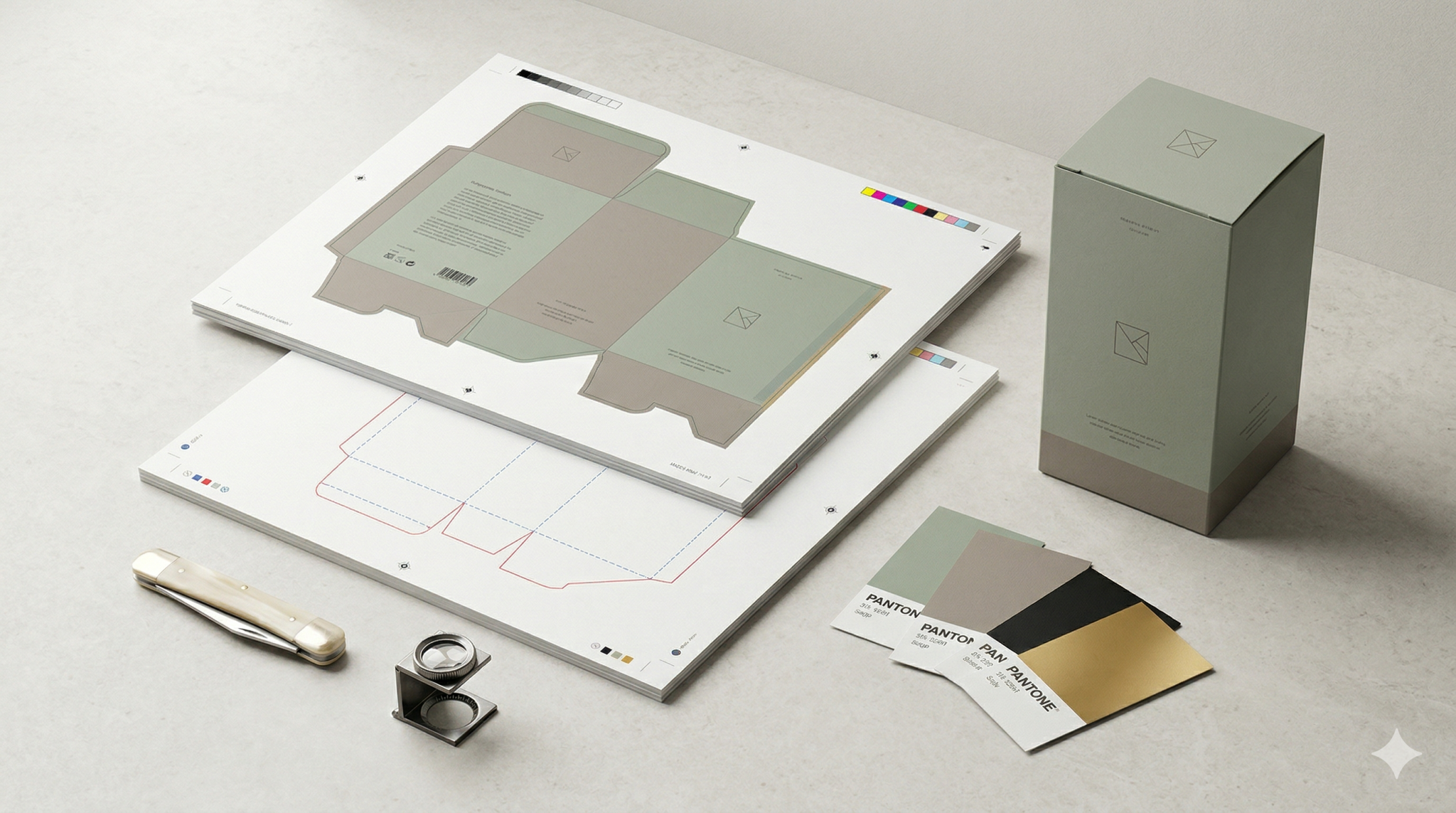
Dielines are critical in packaging artwork setup because they define where the pack folds, cuts, glues and finishes. If the artwork does not align correctly with the structural template, even well-designed packaging can become unusable.
Before production, key dieline checks should include:
- approved structural template is being used
- artwork matches the latest version of the dieline
- folds, creases and glue areas are respected
- no critical text or visual detail sits too close to edges
- front, back and side panels are placed correctly
- barcode and mandatory details are positioned properly
- dimensions match the actual packaging format
This is where coordination matters. If structural packaging changes but the artwork file is not updated to match, errors can pass through unnoticed until physical production begins. That is why dieline review should be part of the final packaging print preparation process, not something assumed to be correct.
Legal and Product Information
Packaging often carries some of the most important product information a customer will see. That makes content accuracy just as important as technical setup.
- Before files are approved for production, legal and product information should be checked for:
- product name consistency
- ingredient or material lists
- usage instructions
- warnings and safety information
- net quantity or measurement details
- manufacturer or distributor information
- country-specific labelling requirements
- barcode accuracy
- claims and certifications
- spelling, punctuation and version control
Many packaging errors happen because teams focus heavily on design and technical export while assuming the text content is already correct. In reality, content updates often happen late in the process, which increases the risk of missing something.
Print-ready packaging should mean the pack is both technically ready and factually correct.
Common Pre-Production Mistakes
Some packaging issues repeat across projects because businesses leave technical review too late or treat it as a routine admin step. The most common pre-production mistakes include:
- exporting artwork without checking printer specifications
- using outdated dielines or obsolete pack dimensions
- failing to include bleed or safe zones correctly
- relying only on on-screen colour approval
- leaving low-resolution images in final files
- placing text too close to folds, cuts or seals
- missing late-stage content changes
- submitting incorrect barcode versions
- mixing multiple file versions across teams
- assuming the final file is correct because the design looks polished
These problems are rarely caused by one major failure. More often, they happen because small gaps in review build up over time. Packaging production files need structured checking because packaging is where multiple disciplines meet: brand, design, regulation, product data and manufacturing.
How Better Preparation Saves Time and Cost
Better preparation reduces both direct and indirect production costs. It lowers the chance of rework, avoids printer queries, limits approval confusion and helps projects move into production with fewer surprises.
Well-prepared print-ready artwork helps businesses:
- avoid expensive reprints
- reduce approval delays
- improve consistency across SKUs
- protect brand presentation in-market
- minimise errors in regulated or information-heavy categories
- improve communication between design, marketing and production teams
It also creates a more scalable packaging process. Once teams use clearer packaging guidelines, better file controls and stronger review steps, future launches become easier to manage. The value is not only in avoiding errors on one project, but in building a more reliable packaging workflow overall.
FAQs
What is print-ready packaging?
Print-ready packaging is packaging artwork that has been fully prepared for production, including correct technical setup, approved dimensions, accurate content and production-aligned file formatting.
What should be included in packaging production files?
Packaging production files should include final approved artwork, correct dimensions, bleed, dielines, high-resolution assets, colour settings suitable for print, and all required legal and product information.
Why is packaging print preparation so important?
Packaging print preparation helps prevent technical errors, content mistakes and production delays. It protects print quality, product accuracy and brand consistency before manufacturing begins.
What is the difference between packaging design and print-ready artwork?
Packaging design focuses on the visual and communication concept. Print-ready artwork is the final production version, prepared with the correct technical settings and reviewed for manufacturing accuracy.
Who should review packaging before production starts?
Packaging should usually be reviewed by design, production, marketing and any relevant product or compliance stakeholders. That helps confirm both technical and content accuracy before files are released.
Final Thoughts
Print-ready packaging is where creative work meets production reality. Before packaging goes to print, the file needs more than visual approval. It needs technical accuracy, correct structural alignment and content that has been properly checked.
That is why packaging preparation should be treated as a serious review stage, not a final export task. Businesses that handle this step well reduce avoidable errors, protect brand quality and move into production with more confidence.
If you are reviewing packaging before print, it is worth making sure the artwork, information and setup are all working together, not just looking finished. A stronger preparation process can prevent costly mistakes long before they reach the production line.