What Email Strategy Actually Means
Email strategy is the planning behind how a business uses email over time. It is not simply a calendar of campaigns. It is the structure that connects audience understanding, business goals, content, timing and lifecycle thinking into one communication system.
A strong email marketing strategy answers practical questions such as:
- Who should receive which messages?
- What should happen after someone subscribes, buys, abandons a basket or goes inactive?
- How often should communication happen?
- What kind of content supports trust, action or retention at each stage?
- How should email fit into the wider customer experience?
This is why email strategy matters beyond sending campaigns. A campaign is one activity. An email strategy is the logic behind the whole system.
For example, a business may send a promotional email about a new product. But without a wider strategy, that message may reach the wrong segment, arrive at the wrong time or fail to connect with what the customer actually needs next. Good strategy improves the outcome before a single email is designed or written.
Why It Matters Beyond Isolated Campaigns
One-off campaigns can create short bursts of activity, but they rarely build consistent customer value on their own. Email becomes much more effective when it is planned as part of an ongoing relationship rather than a sequence of disconnected sends.
Better customer experience
Customers do not experience brands in separate departments. They experience one journey. If email communication feels repetitive, irrelevant or badly timed, the whole brand experience suffers. A clearer email communication strategy helps make interactions feel more useful and more joined up.
Stronger lifecycle support
Different stages of the customer journey need different types of messaging. A new subscriber may need welcome and education emails. An existing customer may need usage guidance, reorder reminders or cross-sell recommendations. Someone who has gone quiet may need re-engagement content. Lifecycle email strategy makes those transitions intentional.
More efficient retention
Retention often depends on what happens after the first conversion. Businesses that focus only on broadcast campaigns can miss the opportunity to build habit, trust and repeat engagement. Retention email planning helps keep customers informed, supported and connected over time.
Better use of data and content
Without strategy, email teams often produce messages reactively. With strategy, audience data, behavioural signals and content themes can be used more intelligently. This leads to better planning, clearer workflows and more relevant communication.
Stronger commercial outcomes
Email strategy supports more than open rates. It can improve onboarding, reduce drop-off, increase repeat purchases, support product education and strengthen customer relationships. These are bigger outcomes than campaign performance alone.
The Core Elements of Strong Email Strategy
Good email strategy is built on a few core principles. These shape how communication is planned, personalised and improved over time.
Audience Segmentation
Not every contact should receive the same message. Segmentation is one of the foundations of effective email marketing strategy because it helps businesses group people based on what matters most.
Segmentation can be based on:
- Customer lifecycle stage
- Purchase behaviour
- Interests or preferences
- Product category
- Engagement level
- Lead source
- Geography or market
A new lead and a loyal returning customer should not receive identical communication. Nor should an active subscriber and someone who has not engaged in six months. Strong segmentation makes messaging more useful and reduces the risk of over-sending irrelevant content.
This also improves the quality of retention email planning. When businesses understand which audiences are most at risk of dropping off, they can design better follow-up flows and more timely reactivation sequences.
Timing and Flow Logic
Strategy is not only about what to send. It is also about when messages should happen and how they connect.
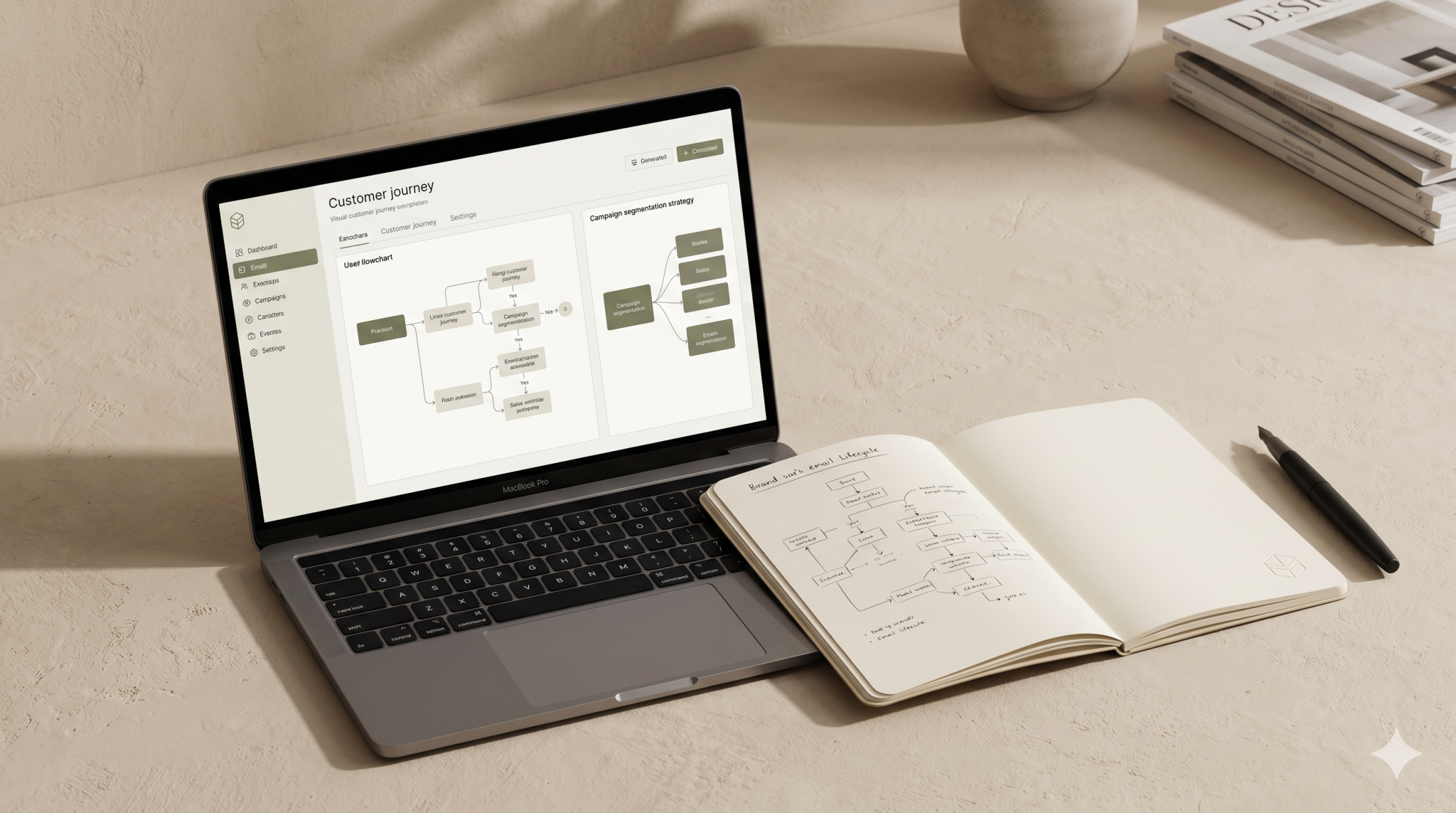
Timing and flow logic are at the heart of lifecycle email strategy. Instead of relying entirely on scheduled campaigns, businesses can build automated journeys that respond to customer behaviour and lifecycle stage.
Examples include:
- Welcome sequences after sign-up
- Onboarding emails after account creation
- Basket abandonment flows
- Post-purchase education
- Review requests
- Replenishment reminders
- Re-engagement campaigns for inactive users
These journeys are more effective because they are triggered by customer context, not just by the marketing calendar. Good timing makes communication feel more natural and less intrusive.
Flow logic also helps prevent overlap. Without it, customers can receive too many emails at once or conflicting messages from different teams. A proper email strategy creates rules, priorities and sequencing to keep communication coherent.
Message Relevance
Relevance is where strategy becomes visible to the customer. They may never see the planning behind the system, but they will notice whether the message feels useful.
Relevant email content usually reflects:
- Where the customer is in their journey
- What they have already done
- What they may need next
- The right level of detail for that moment
- A clear reason for the message
For example, a first-time buyer may benefit from setup guidance or reassurance rather than another sales push. A repeat customer may respond better to new product suggestions based on past behaviour. A disengaged subscriber may need a reason to reconnect, not the same weekly content they have already ignored.
This is where email communication strategy overlaps with content strategy and customer experience. Strong email is rarely just about promotion. It is about delivering the right type of information at the right stage.
Retention and Growth
A lot of businesses put most of their attention on acquisition, then treat email mainly as a promotional channel. But one of the most valuable roles of email strategy is supporting retention and growth after the first action.
This can include:
- Helping customers get value from what they bought
- Encouraging repeat purchase at the right time
- Introducing related products or services
- Reinforcing trust and brand consistency
- Reducing inactivity
- Supporting loyalty and longer customer relationships
Retention email planning is especially important for brands with repeat purchase cycles, subscription models or longer decision journeys. But even for service businesses, ongoing email can help nurture leads, educate prospects and strengthen connection over time.
When email strategy is designed around long-term value, businesses stop asking only, “What campaign should we send this week?” and start asking, “What should the customer experience look like over the next three months?”
Common Email Strategy Mistakes
Many email problems are not creative problems. They are planning problems. Businesses often struggle with email performance because the underlying strategy is weak or inconsistent.
Treating every email as a campaign
This is one of the most common issues. If every send is treated as a standalone campaign, communication becomes reactive. There is no journey, no sequencing and no long-term logic behind what the audience receives.
Sending the same message to everyone
Broad sends still have a place, but relying on them too heavily weakens performance and relevance. A lack of segmentation usually leads to lower engagement and a poorer overall experience.
Focusing only on promotion
When most emails are sales-led, customers can lose interest quickly. Stronger email marketing strategy balances promotional content with onboarding, education, support, trust-building and retention.
Ignoring post-purchase communication
Many brands work hard to win the first conversion, then go quiet or return only with discount-led emails. This misses a key opportunity to build satisfaction, repeat behaviour and customer loyalty.
Overlooking timing and frequency
Even good content can perform badly if the timing is wrong. Too many emails can create fatigue. Too few can weaken engagement. Without clear flow logic, communication often becomes uneven or conflicting.
Failing to connect email with the wider journey
Email should not sit in isolation from website experience, customer support, sales or content planning. When it does, the customer journey becomes fragmented. A better email strategy aligns with the broader brand experience.
What Better Email Planning Looks Like
Better email planning starts with stepping back from individual sends and looking at the whole communication system.
A stronger approach usually includes:
Clear lifecycle mapping
Identify the key stages customers move through, such as subscriber, lead, first-time buyer, active customer, repeat customer and inactive contact. Then define what each stage needs from email.
Defined flow architecture
Build essential flows around behaviour and journey stages. This gives email a structural foundation rather than leaving everything to ad hoc campaigns.
Audience-led content planning
Plan content based on customer needs as well as business goals. This creates a more balanced email communication strategy that supports both commercial outcomes and customer value.
Prioritised segmentation
Not every segmentation model needs to be complex. Start with the segments that make the biggest difference, such as new vs existing customers, active vs inactive users or product category interest.
Measurement beyond campaign metrics
Opens and clicks matter, but they are not the whole picture. Better email strategy also looks at retention, repeat purchase, onboarding completion, reactivation, unsubscribe patterns and long-term engagement quality.
Cross-channel thinking
Email should connect with landing pages, customer experience, content strategy and lifecycle marketing. When all these elements work together, communication feels more coherent and more useful.
In practical terms, better email planning often means fewer random sends and more purposeful communication. It means building an email system rather than just producing emails.
FAQs
What is email strategy in simple terms?
Email strategy is the plan behind how a business uses email across the customer journey. It covers audience segmentation, timing, content, automation and lifecycle thinking rather than just one-off campaigns.
How is email strategy different from email campaigns?
An email campaign is a specific send or short-term activity. Email strategy is the wider system that decides who receives messages, when they receive them, why they receive them and how those messages support long-term business and customer goals.
Why is lifecycle email strategy important?
Lifecycle email strategy helps businesses communicate based on customer stage and behaviour. This makes email more relevant and useful, especially for onboarding, retention, repeat purchase and re-engagement.
What does retention email planning include?
Retention email planning can include post-purchase communication, education, reminders, loyalty messaging, replenishment prompts, re-engagement sequences and customer support content designed to keep people connected over time.
Does every business need an email strategy?
Any business using email consistently benefits from having a strategy. Even smaller businesses need clarity around audience, messaging priorities and lifecycle communication if they want email to contribute meaningfully over time.
Final Thoughts
Email strategy matters because email is not just a sending tool. It is a relationship channel. When businesses treat it as a series of isolated campaigns, they often miss the bigger opportunity to guide, support and retain customers more effectively.
A stronger email strategy brings structure to communication. It connects audience needs, lifecycle stages, timing, content and commercial goals into one system. The result is not simply more emails, but better ones. Emails that feel more relevant, more coherent and more valuable to the customer.
If your current email activity feels reactive or disconnected, it may be time to think beyond campaigns and look at the system underneath. Thoughtful planning is what turns email from a channel of sends into a channel of long-term value.
If you are reviewing how email fits into your wider customer journey, it can help to build a clearer system around lifecycle communication, content planning and retention rather than relying only on isolated sends.