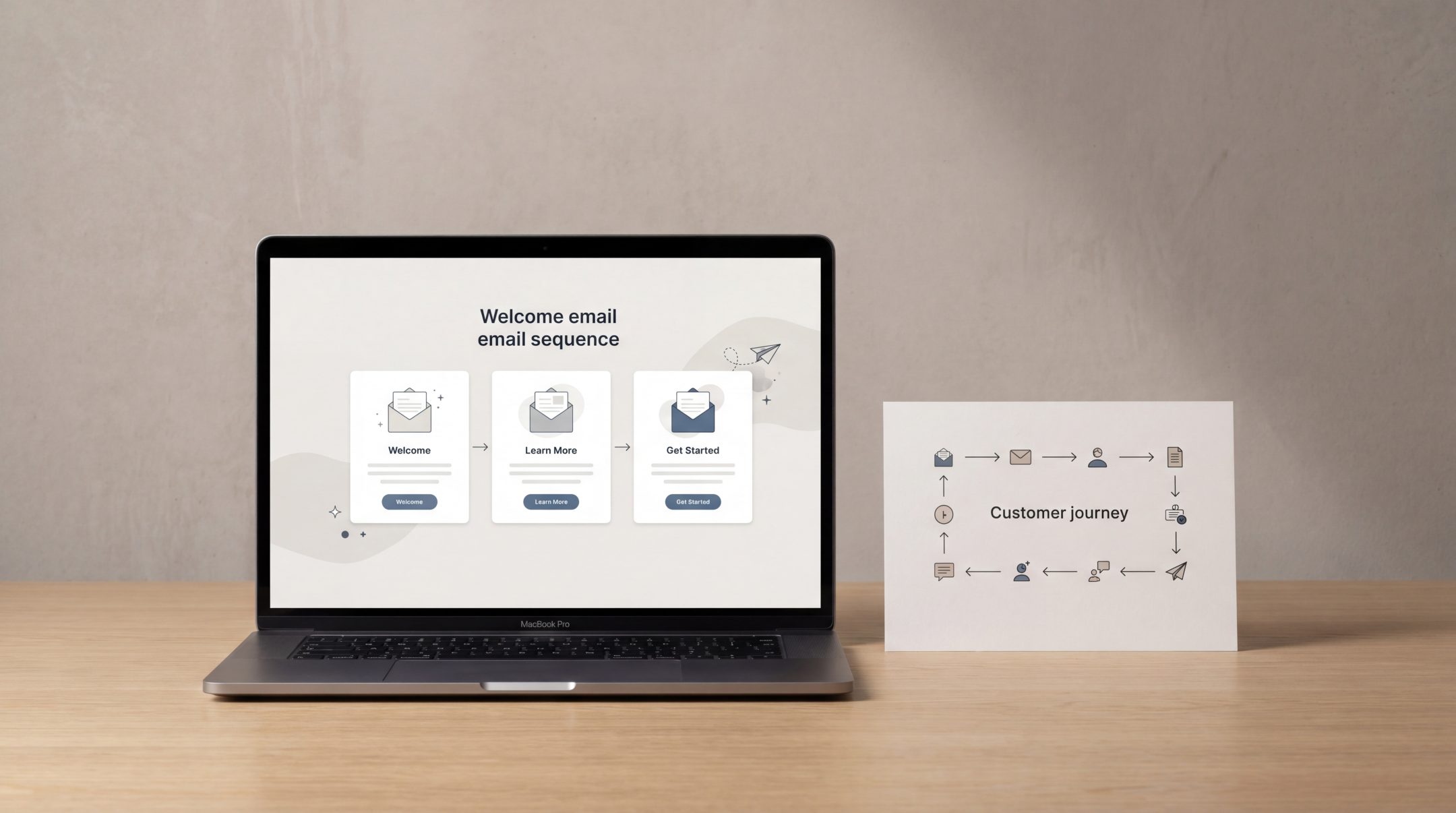
The first few emails a brand sends after signup shape the relationship that follows. A strong email welcome flow does more than confirm that someone has joined a list. It introduces the brand, sets expectations and helps the subscriber understand what comes next. When handled well, it creates clarity and trust from the start rather than adding noise to an already crowded inbox.
Why the Welcome Flow Process Matters
An email welcome flow is often the first direct conversation a brand has with a new subscriber. That makes it an important moment, not just a technical automation.
People who sign up are usually at a high-attention stage. They have shown interest, taken action and given permission for future communication. If the first email after signup feels vague, generic or overly promotional, that early attention can disappear quickly. If it feels clear, useful and well-paced, the brand has a better chance of building a stronger long-term connection.
A welcome email sequence also helps brands avoid a common problem in lifecycle marketing: jumping too quickly into sales messaging before context has been established. New subscribers do not always know what the brand stands for, what it offers or why future emails will matter to them. The welcome flow is where that foundation gets built.
Step 1: Confirm the Signup and Set Expectations
The first message in an email onboarding flow should do the simplest job first. It should confirm that the signup worked and reassure the subscriber that they are in the right place.
This email should answer a few basic questions clearly:
- What did the person sign up for?
- Who is the brand they will be hearing from?
- What kind of emails should they expect?
- How often are those emails likely to arrive?
That level of clarity matters more than many brands realise. It reduces confusion, lowers the chance of immediate unsubscribes and makes future messages feel more expected rather than intrusive.
A good opening email is usually straightforward. It thanks the subscriber, confirms the signup and gives a short preview of the value ahead. If there is an incentive, such as access to a resource or a first-order offer, that should be delivered cleanly and without distraction.
The goal is not to say everything at once. The goal is to make the first interaction feel reliable.
Step 2: Introduce the Brand Clearly
Once the signup is confirmed, the next role of the email welcome flow is to explain who the brand is in a simple, useful way.
Many brands make the mistake of assuming subscribers already understand the business. In reality, interest does not always equal familiarity. Someone may have signed up from a landing page, a pop-up, a social campaign or a referral and still have only a partial understanding of what the brand actually does.
This part of the welcome automation should help answer questions like:
- What does the brand offer?
- What makes it different?
- Who is it for?
- What kind of experience or communication style can people expect?
This does not need to become a long brand story unless storytelling is central to the offer. In most cases, brevity and clarity are more valuable. A concise explanation of the brand’s role, approach or promise usually works better than a broad mission statement.
The tone matters as well. The message should feel aligned with the wider customer experience. If the brand is premium, practical, warm or expert-led, that should come through in the writing. Welcome emails are often the first place subscribers experience the brand voice directly.
Step 3: Explain the Product, Service or Value Proposition
After the brand has introduced itself, the next step is to explain why the subscriber should stay engaged.
This is where the welcome email sequence should connect the brand to a clear offer or value proposition. For product brands, that may mean showing what kinds of products are available, how they are organised or what problem they solve. For service-led businesses, it may mean clarifying the service categories, process or areas of expertise.
The important thing is to make the value easy to understand. New subscribers should not have to work to figure out why the brand is relevant to them.
Focus on clarity before depth
A common mistake is trying to communicate too much too early. Brands often overload welcome emails with feature lists, brand claims, multiple categories and too many calls to action. This usually weakens understanding rather than improving it.
A better approach is to prioritise the most important points:
- the main offer
- the most relevant benefit
- the most useful next destination
- the strongest reason to keep paying attention
Match the message to the signup context
The email onboarding flow should also reflect why someone signed up in the first place. If they joined for educational content, the welcome sequence should not immediately behave like a hard sales funnel. If they signed up while browsing products, it makes sense to help them continue that journey with more relevant product guidance.
Good welcome flow planning respects context. It connects the message to the subscriber’s likely interest instead of treating every signup the same way.
Step 4: Guide the Subscriber Toward a Relevant Next Step
A welcome flow should not stop at introduction. It should also guide the subscriber toward one clear and sensible next action.
That next step might be different depending on the business model, but it should always feel helpful rather than forced. Examples include:
- exploring a product category
- reading a useful guide
- learning how a service works
- completing a profile or preference step
- viewing bestsellers or featured offers
- booking a consultation or discovery call
The key is relevance. The first meaningful action should align with where the subscriber is in the relationship. Someone who has just joined a list is not always ready for a major conversion step. In many cases, the right move is a smaller piece of engagement that brings them closer to confidence.
This is where welcome automation becomes strategically useful. It allows brands to create a smoother early journey instead of relying on one generic first email after signup and then dropping the subscriber into a broader campaign calendar with no context.
Step 5: Continue the Relationship Without Overloading the Inbox
A strong email welcome flow does not overwhelm the subscriber with too many messages too quickly. It builds momentum at a sensible pace.
The temptation is understandable. Brands often want to introduce the business, explain the offer, deliver proof, highlight products, encourage action and promote an incentive all at once. The result is usually too much email in too little time.
A better welcome email sequence is paced with restraint. Each message has a job. Together, the emails create a progression:
- confirm and reassure
- introduce the brand
- explain the value
- guide the next step
- transition into the ongoing relationship
This sequence does not need to be long to be effective. What matters is that the flow feels intentional. Subscribers should feel guided, not chased.
As the sequence ends, the final message or transition point should make it clear what happens next. That might mean a regular newsletter rhythm, more tailored lifecycle marketing or movement into a segment-specific automation based on engagement and interest.
Common Problems in Welcome Flow Planning
Many underperforming welcome flows are not failing because automation is missing. They are failing because the messaging logic is weak.
Here are some of the most common issues:
The first email is purely transactional
A confirmation email without any brand context misses an important opportunity. Even a short opening message should begin shaping recognition and trust.
The sequence jumps into promotion too quickly
Heavy discounting or hard selling in the opening stage can make the brand feel impatient. New subscribers often need orientation before they are ready to act.
The emails repeat the same message
Sometimes every email in a welcome automation says roughly the same thing in a slightly different format. That creates fatigue. Each message should add something new.
There is no clear journey
A sequence without progression feels random. The subscriber receives messages, but there is no sense of movement from signup to understanding to action.
The inbox experience becomes too intense
Too many emails too close together can reduce trust rather than build it. Frequency should support attention, not abuse it.
The content is brand-led but not subscriber-led
Brands naturally want to talk about themselves, but welcome flows work best when they connect brand information to subscriber needs. The focus should be on helping the reader understand what is relevant to them.
What Better Welcome Flow Execution Looks Like
A better email welcome flow is clear, structured and useful. It respects the fact that early communication sets the tone for everything that follows.
In practice, stronger execution usually includes:
Clear messaging priorities
Each email has one main purpose. The flow does not try to solve every communication need at once.
Consistent tone and brand presentation
The writing, design and calls to action feel like part of the same customer experience. The subscriber gets a coherent introduction rather than a disconnected set of messages.
Logical sequencing
The welcome automation moves from confirmation to orientation to value to action. That order makes the journey easier to follow.
Relevance to audience and context
The content reflects how and why the person signed up. Where possible, segmentation improves the experience by making the sequence more specific.
A smooth handoff into ongoing email marketing
The end of the welcome email sequence should feel like a transition, not a stop. The subscriber should understand what sort of communication comes next and why it is worth staying subscribed.
Better execution is usually less about writing more and more about saying the right things in the right order.
FAQs
What is an email welcome flow?
An email welcome flow is an automated sequence sent to new subscribers after they join a list. Its purpose is to confirm the signup, introduce the brand, explain the value of future communication and guide the subscriber toward a relevant next step.
How many emails should a welcome email sequence include?
There is no universal number, but most brands do not need an overly long sequence. What matters more is that each email has a clear role and that the sequence progresses logically without overwhelming the subscriber.
What should the first email after signup say?
The first email after signup should confirm that the signup worked, thank the subscriber, explain what they have joined and set expectations for what comes next. It should be simple, reassuring and clear.
What is the difference between a welcome flow and regular email campaigns?
A welcome flow is triggered by signup and is designed for early relationship-building. Regular campaigns are usually sent to broader segments on an ongoing basis. The welcome flow provides context before subscribers enter the wider email program.
Why do some welcome automations perform poorly?
Poor performance often comes from unclear messaging, too much promotion too soon, repetitive content or weak sequencing. The problem is often not the automation itself but the lack of a clear communication strategy behind it.
Final Thoughts
A good email welcome flow helps brands make a better first impression. It confirms the signup, explains the brand clearly and gives new subscribers a useful path forward without flooding their inbox.
When the sequence is planned with care, the first few emails do more than introduce a mailing list. They begin a clearer, more valuable customer relationship.
If your current welcome automation feels rushed, generic or disconnected, it may be worth reviewing how those first messages are setting expectations and guiding the next step. A clearer welcome flow can make the entire email experience work harder from the start.