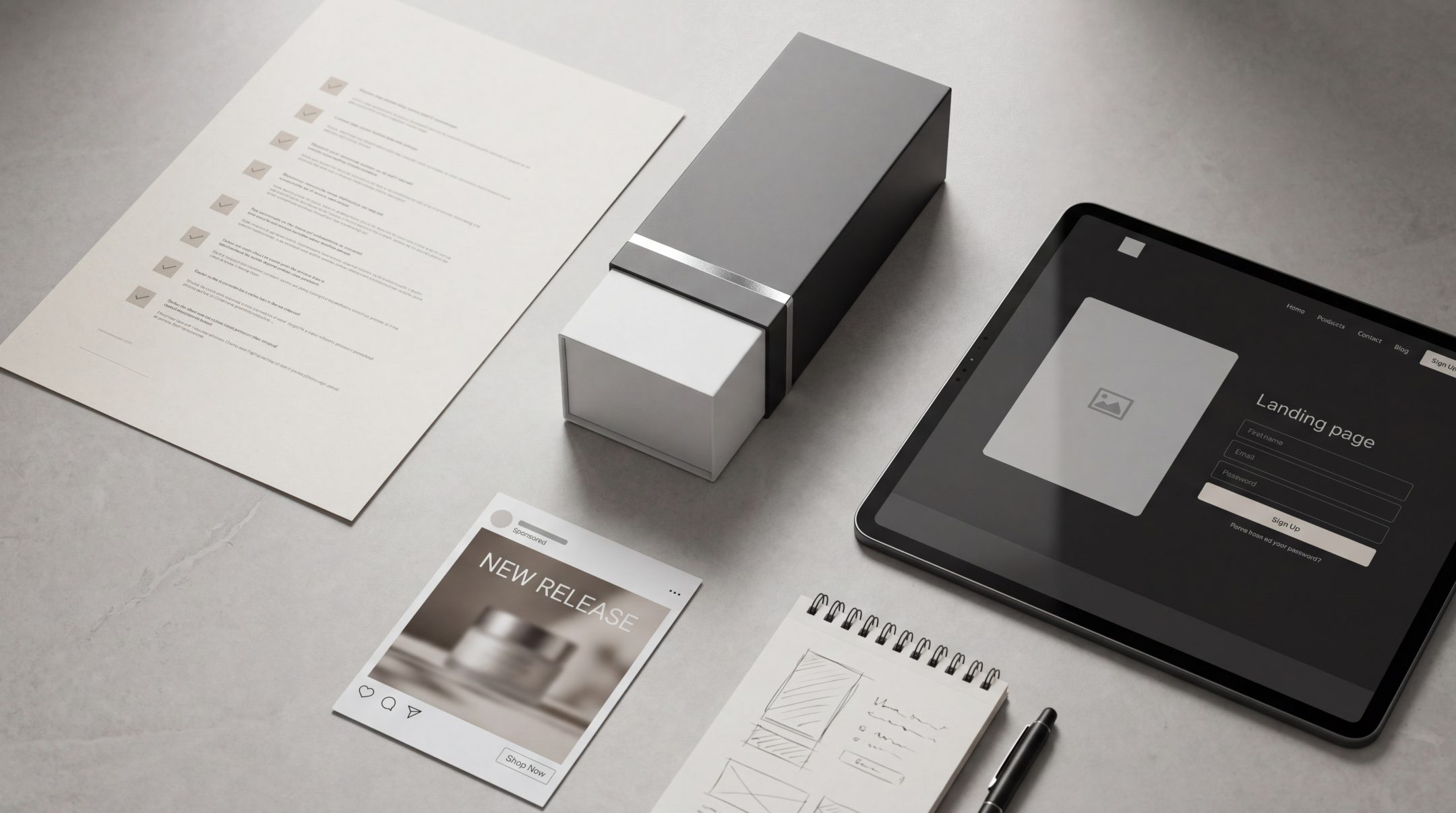
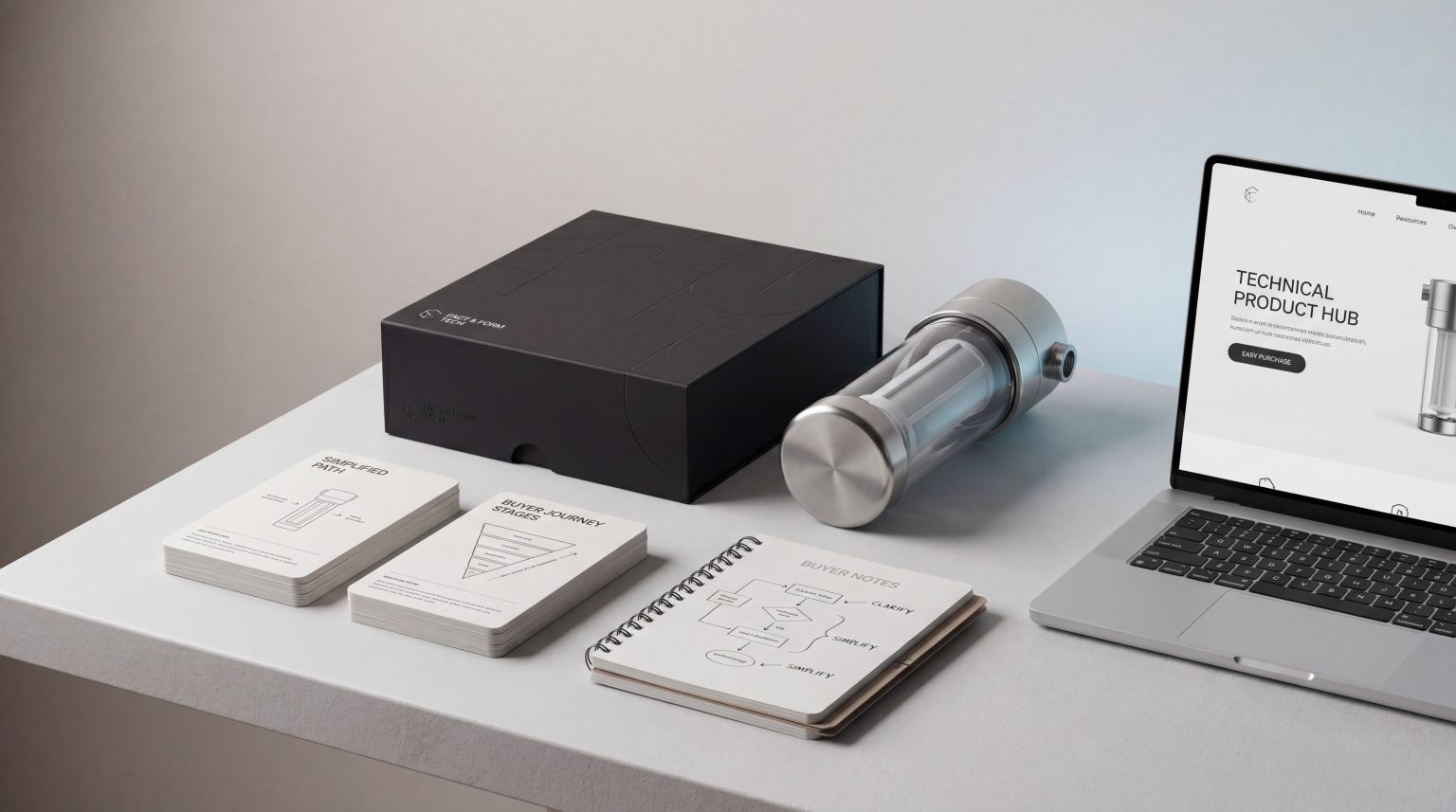
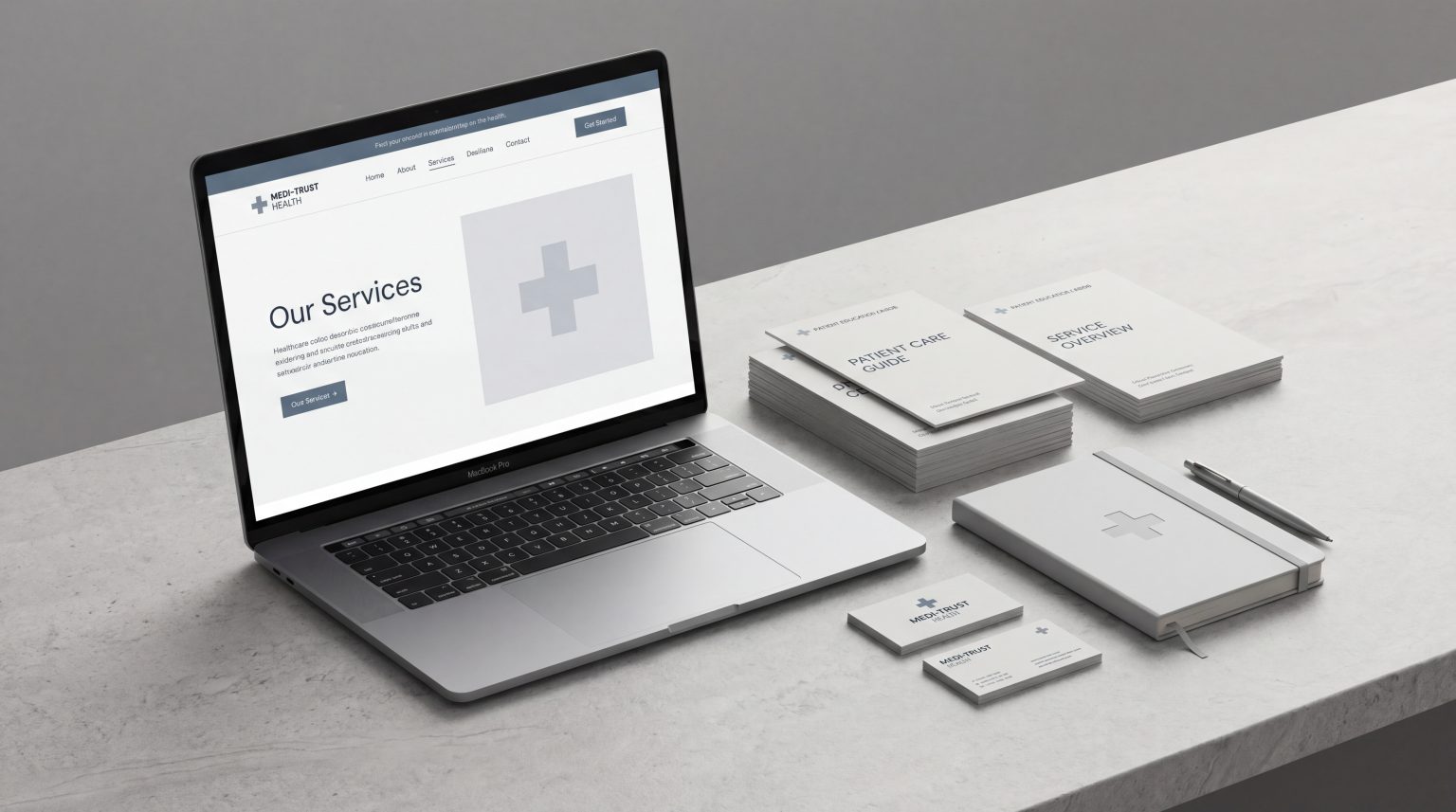
A product launch can move quickly once media, sales and distribution plans are active. The problem is that many brands start scaling attention before the core marketing assets are ready. This product launch checklist helps clarify what should be prepared first, so the launch feels structured, consistent and easier to manage across channels.
Why a Product Launch Checklist Matters
A launch is rarely one asset or one campaign. It is a connected system of messaging, visuals, landing pages, ads, social content, email flows and sales support. If one part is weak, the full launch can feel unclear.
For FMCG and cosmetics brands, this is especially important. A new product may need to work across packaging, retail, ecommerce, paid social, influencer content, email and product education at the same time. Each channel has a different format, but the product story should still feel consistent.
A practical marketing launch checklist helps teams answer a few important questions before anything goes live:
Is the product clearly explained?
Are the visual assets ready for every major channel?
Does the landing page support the campaign message?
Can paid, social and email activity work together?
Are teams using the same claims, benefits and product language?
Strong launch preparation also reduces last-minute decision-making. Instead of fixing assets while campaigns are already running, the team can focus on optimisation, testing and response.
The Essential Product Launch Checklist
The best product launch assets are not just attractive. They help people understand the product quickly, trust the offer and take the next step. The checklist below covers the core marketing assets that should usually be ready before a campaign goes live.
Brand and Product Messaging
Messaging should be prepared before visual production starts. Without clear messaging, every asset becomes harder to create because the team is still deciding what the product actually needs to communicate.
At minimum, the messaging set should include:
A clear product description
The main product benefit
Supporting features or proof points
Audience-specific pain points
A short value proposition
Approved product claims
Tone of voice guidance
Key phrases to use and avoid
For example, a skincare launch may need to define whether the product is positioned around clinical performance, natural ingredients, sensory experience, routine simplicity or premium self-care. Each direction would lead to a different landing page, ad concept and email sequence.
Good product communication also helps avoid the common mistake of listing too many features at once. Most launch assets need hierarchy. The audience should understand the main reason to care before they are asked to absorb technical details.
Product Visuals and Packaging Assets
Visual assets are often the most visible part of a product launch. They also tend to create bottlenecks if they are not planned early.
The launch asset set should include clean product images, packaging mockups, lifestyle visuals where relevant, ecommerce images, social-ready crops and paid media formats. For cosmetics and FMCG brands, packaging visuals are especially important because the product may need to feel credible before someone has read a full description.
Useful launch visuals may include:
Hero product image
Packshot on a clean background
Packaging front, side and detail views
Product-in-use imagery
Texture or ingredient visuals
Before-and-after format, where appropriate and compliant
Retail or shelf-style presentation
Ecommerce gallery images
Ad-ready crops for different placements
The goal is not to create more visuals than necessary. The goal is to create the right visual system so every channel is not improvising from one or two images.
Landing Page or Product Page
The landing page or product page is where attention turns into action. If ads, social content and email campaigns create interest, the page has to make the next step clear.
For ecommerce launches, this may be a product detail page. For lead-generation or B2B launches, it may be a dedicated campaign landing page. In both cases, the page should connect directly to the launch message.
A good launch page usually needs:
A clear headline
Strong product benefit
Product image or visual proof
Key features or differentiators
Audience-specific explanation
Trust signals
FAQs or objection handling
Pricing, availability or purchase details
Clear call to action
Mobile-first structure
Shopify’s guidance on ecommerce launch planning is useful here because it treats launch activity as a full sequence rather than a single announcement. That same thinking should apply to the landing page. It should not sit separately from the campaign. It should complete the journey.
For performance campaigns, the page also needs consistency with the ad creative. If the ad promises one benefit and the page leads with something else, the user has to reconnect the logic themselves. That friction can weaken the campaign before optimisation even begins.
Paid Media Creative
Paid media assets should be built once the messaging and landing page are clear. This helps keep creative, targeting and page experience aligned.
A product launch paid media set may include:
Static ads
Short-form video ads
Product benefit creatives
Problem-solution creatives
Offer-led creatives
UGC-style scripts or directions
Retargeting assets
Launch announcement variations
Format-specific crops for Meta, TikTok, Google or other channels
The first wave of paid creative should not rely on one concept. A launch needs enough variation to test different angles. One audience may respond to product benefits, another may respond to proof, another may need education before considering purchase.
This is where paid social launch activity needs to be planned as part of the wider launch system. Creative, targeting and landing pages should not be treated as separate tasks. They work best when they are designed around the same product story.
Social Content
Organic social content supports launch visibility, education and repetition. It gives the product more context than a single ad or product page can usually provide.
A practical social launch set may include:
Launch announcement post
Product benefit post
Behind-the-scenes or product development post
Packaging reveal
Use case content
Founder or brand story content
FAQ post
Short-form video scripts
Story formats
Countdown or availability reminders
For FMCG and cosmetics, social content often has to balance desire and clarity. The product should feel visually appealing, but the audience also needs to understand what it is, who it is for and why it is different.
Social assets should not simply repeat the same message in different sizes. They should build familiarity from different angles. One post may introduce the product, another may explain the benefit, another may answer a common objection and another may show how it fits into a routine or lifestyle.
Email and Retention Assets
Email is often overlooked until late in launch planning, but it can be one of the most useful channels for warming up existing audiences and supporting repeat engagement.
A basic launch email set may include:
Pre-launch teaser
Launch announcement
Product education email
Offer or availability reminder
Abandoned cart flow, where relevant
Post-purchase email
Review request
Cross-sell or routine-building email
Mailchimp’s guidance on product launch email planning is a useful reference because it focuses on building anticipation and guiding the audience through the launch, not just sending one announcement.
Retention assets matter because a product launch does not end when the first campaign goes live. After launch, brands often need to answer questions, support consideration, encourage repeat purchase and gather early feedback. Email can help structure that communication without relying only on paid reach.
Common Assets Businesses Overlook
Many teams prepare the obvious launch assets but miss the smaller pieces that make execution smoother.
One common gap is the product FAQ. Questions around usage, ingredients, compatibility, shipping, availability, guarantees or product differences should be answered before the campaign starts. If these answers are not prepared, customer support, social replies and sales teams may all explain the product differently.
Another overlooked asset is the internal messaging guide. Even a short document can help keep the team aligned. It should include the approved product description, benefits, claims, tone, audience notes and key campaign messages.
Brands also often miss retargeting assets. The first ad a person sees should not always be the same as the second or third. Retargeting creative can address objections, explain product details or remind users of launch availability.
Other commonly missed assets include:
Product comparison content
Retailer or distributor sell-in materials
Influencer briefing notes
Customer support responses
Launch-day social story assets
Post-launch review prompts
Campaign reporting structure
These are not always large creative tasks, but they often make the difference between a launch that feels controlled and one that feels reactive.
How to Use This Checklist Before Launch
A product launch checklist is most useful when it becomes part of the planning process, not a final review document.
Start by grouping assets by priority. Some assets are essential before launch, while others can be prepared for the first few weeks after launch. For most brands, messaging, product visuals, landing page content, paid creative, social launch content and launch email assets should be ready before paid campaigns scale.
Next, check the journey from first impression to action. A user might see a social post, then an ad, then a product page, then an email reminder. Each touchpoint should feel connected. The message does not need to be identical everywhere, but the logic should feel consistent.
This is where the wider campaign flow matters. Launch planning is not only about making assets. It is about making sure those assets guide the audience through awareness, interest, consideration and action.
Finally, review the checklist by channel and by audience. A product may need slightly different emphasis for new customers, existing customers, retail buyers, distributors or professional users. The core message should stay consistent, but the supporting detail may change.
A simple pre-launch review can follow this order:
Confirm the product message
Approve the visual direction
Review the landing page or product page
Check campaign creative against the page
Prepare social and email sequences
Review FAQs and support responses
Confirm tracking and reporting
Launch with a clear optimisation plan
The aim is not perfection. The aim is readiness. A launch can still evolve once real feedback and campaign data arrive, but the foundation should be strong before attention is scaled.
FAQs
What is a product launch checklist?
A product launch checklist is a structured list of the marketing assets, messages and campaign elements that should be prepared before a product goes live. It helps teams organise launch activity across channels such as landing pages, paid media, social content and email.
What marketing assets are most important before launch?
The most important assets are usually the product messaging, product visuals, landing page or product page, paid media creative, social content and email assets. These form the core journey from awareness to action.
When should product launch assets be prepared?
Core launch assets should be prepared before campaigns go live. Messaging and page structure should usually come first, followed by visual assets, campaign creative, social content and email sequences.
Why do product launches fail to feel consistent?
Many launches feel inconsistent because different teams create assets separately. If the product message, visuals, ads, landing page and emails are not aligned, the audience receives mixed signals.
Does every launch need paid media assets?
Not every launch needs paid media from day one, but most commercial launches benefit from having paid creative ready. Even a small test campaign can help validate messaging, audience response and landing page performance.
Final Thoughts
A strong product launch is not built from one announcement or one campaign asset. It depends on a connected set of messages, visuals, pages and channel-specific content that all support the same product story.
The right product launch checklist gives teams a practical way to prepare before investing in campaign scale. For brands launching new FMCG, cosmetics or consumer products, that preparation can make the launch feel clearer, more consistent and easier to optimise.
Fact & Form helps brands plan and create the marketing assets needed for stronger product launches, from product communication and landing pages to campaign creative and performance-ready content.