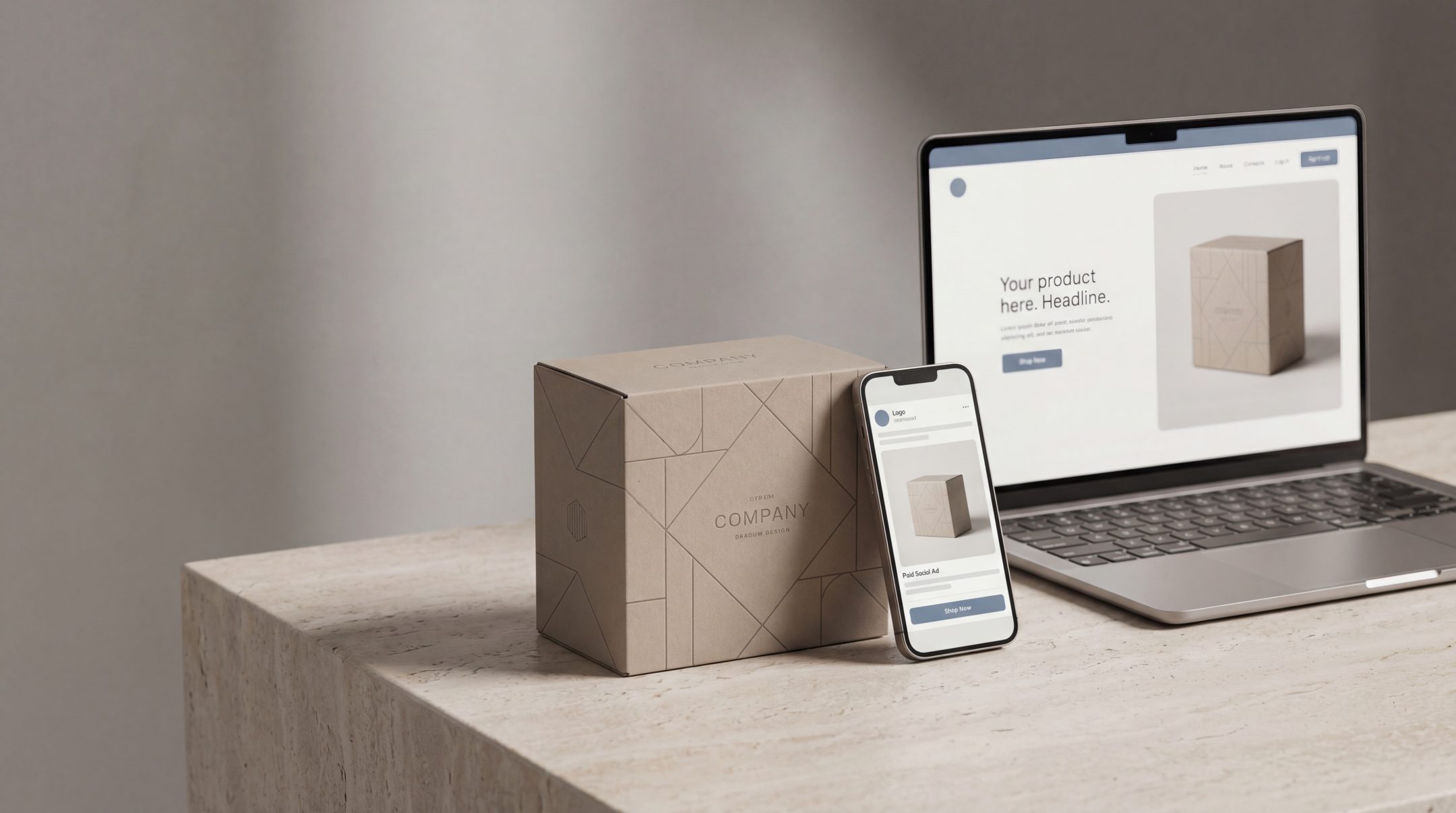
Launching a product through paid social can create attention quickly, but attention alone does not make a launch effective. Strong results usually come from connected execution, where the message is clear, the creative is relevant, the targeting reflects audience intent and the landing page continues the story without friction. When these parts are planned as one system, paid social becomes far more useful as a launch tool.
Why the Paid Social Launch Process Matters
Paid social for product launches often gets treated as a media task. A team builds a few ads, selects audiences and pushes budget live. The problem is that launches rarely fail because one platform setting was wrong. They usually underperform because the overall system is disconnected.
A product launch ad can look polished and still struggle if the message is vague. Targeting can be technically correct and still miss the real buying context. A landing page can be well designed and still weaken performance if it does not reflect the promise made in the ad.
This is why launch planning matters. Paid social works best when it connects four things clearly:
- what the product is
- why it matters to a specific audience
- how that value is presented in creative
- where the user lands after clicking
For FMCG and consumer product brands in particular, this matters even more. Audiences move quickly, attention is short and product understanding often needs to happen within seconds. A launch campaign needs clarity before it needs scale.
Step 1: Define the Product Launch Message
Before building ads or selecting audiences, the product launch message needs to be clear. This is the foundation for everything else. If the message is weak, the campaign becomes harder to optimise because the creative, targeting and landing page are all built on unstable ground.
A good launch message should answer a few simple questions:
- What is being launched?
- Who is it for?
- Why should this audience care now?
- What makes it different, useful or timely?
- What action should people take next?
This sounds basic, but many launch campaigns skip this step. They jump straight into visuals or platform setup without agreeing on the commercial message first. That often leads to ads that look good but do not communicate enough.
In practice, the launch message should not be one broad statement. It should be a structured messaging base that can flex across different audience needs. For example, one audience may respond to novelty, another to convenience and another to product performance. The product stays the same, but the message emphasis can change.
For product launch paid social campaigns, clarity matters more than cleverness. The message should be easy to understand in-feed, easy to adapt into creative and easy to continue on the landing page.
Step 2: Build Creative Variations Around Audience Needs
Once the launch message is defined, creative development should focus on audience relevance rather than decoration. Creative is not just there to attract attention. It needs to communicate the right product value to the right person in the right context.
This is where many product launch ads go wrong. Teams often build one hero visual and expect it to work across all audience groups. In reality, product launches usually need creative variation to reflect different motivations and levels of awareness.
Focus on message angles, not just format changes
Creative variation should go beyond resizing the same asset for different placements. It should test different message angles. For example:
- problem and solution
- product feature and benefit
- launch announcement
- comparison or differentiation
- lifestyle or usage context
- offer or urgency, where relevant
A good paid social strategy for launches gives each audience segment a reason to care, not just a different crop of the same visual.
Match the visual to the product decision
Creative should also reflect the nature of the product and the speed of the decision. A low-consideration FMCG launch may need immediate recognition, simple product communication and clean visual hierarchy. A more considered product may need more educational creative, stronger benefit framing or clearer proof points.
Keep brand consistency without losing flexibility
Variation does not mean fragmentation. Launch creative still needs to feel coherent as a campaign. Brand cues, tone and visual logic should stay consistent even when the message angle changes. The goal is not to produce unrelated ads. It is to create a family of assets built around one launch idea.
When creative is developed this way, paid social for product launches becomes more adaptable and easier to optimise once real performance data starts coming in.
Step 3: Match Targeting With the Launch Stage
Targeting should reflect where the audience is in relation to the launch, not just who they are demographically. This is an important shift. Good targeting is not only about selecting an audience profile. It is also about understanding launch stage and expected intent.
A launch campaign usually includes more than one audience type. Each group needs different communication.
Early-stage awareness audiences
At the start of a launch, some audiences are seeing the product for the first time. They may need simple, high-level communication. In this stage, targeting should support discovery and interest rather than pushing for too much commitment too early.
Creative for these users often works best when it introduces the product clearly, highlights the most relevant value and reduces friction in understanding.
Consideration audiences
These are people who may already know the brand, have engaged with similar products or have shown some relevant behaviour. They often need stronger reasons to believe. Here, targeting and messaging can become more specific. Product benefits, proof points, use cases or differentiators can play a bigger role.
Warmer and retargeting audiences
Once launch traffic starts building, warmer audiences become increasingly important. These users may have watched videos, clicked ads, visited product pages or engaged with launch content. They are not the same as cold audiences, so they should not receive the same message.
Retargeting should move the conversation forward. It should answer objections, reinforce value or bring users back with more context. Repeating the same top-line ad usually wastes the advantage of audience warmth.
A stronger launch campaign strategy treats targeting as part of communication planning. It is not just a media filter. It is a way to sequence the right message according to awareness and intent.
Step 4: Connect Each Ad to the Right Landing Page
This is one of the most overlooked parts of paid social launch execution. Even when the ad performs well, the campaign can lose momentum if the landing page does not continue the message properly.
A landing page should feel like the next logical step after the click. The user should immediately recognise that they arrived in the right place and that the product promise from the ad is being fulfilled.
Keep message continuity
If the ad focuses on one specific product benefit, the landing page should reflect that benefit clearly and early. If the ad speaks to a launch angle such as convenience, premium feel or performance, the landing page should reinforce the same angle rather than switching into generic brand language.
This continuity matters because users are making fast trust decisions. Any disconnect between ad and landing page creates friction.
Match the page to the campaign goal
Not every launch ad should send users to the same destination. The right landing page depends on the campaign objective.
For example, a launch campaign might direct users to:
- a dedicated product launch page
- a product detail page
- a collection page
- an email sign-up page for early access
- a retail locator or stockist page
- an educational page for more considered products
The destination should fit the action being asked of the user. Sending all traffic to a general homepage usually weakens campaign performance because it forces the audience to do extra work.
Make the page conversion-ready
A launch landing page does not need to be long to be effective, but it does need to be focused. In most cases, it should include:
- a clear headline aligned with the ad message
- visible product information
- simple benefit framing
- strong imagery or product context
- obvious next steps
- minimal distraction
For product launch paid social campaigns, the click is not the finish line. It is only the handoff. The landing experience needs to do its part.
Step 5: Review Early Signals and Adjust Fast
A launch campaign should not be left alone once it goes live. Early performance signals are valuable because they reveal whether the system is working as intended.
The important thing is not to overreact to one metric in isolation. A launch needs to be reviewed across the full journey. For example, a strong click-through rate with weak landing page engagement may suggest a mismatch between ad promise and destination. Low engagement across multiple creative variations may suggest a messaging issue rather than a media issue.
Useful early signals often include:
- click-through rate
- thumb-stop or engagement signals
- landing page behaviour
- add-to-cart or sign-up actions
- conversion rate, where relevant
- cost efficiency by audience or creative variation
The goal of early optimisation is not simply to cut underperforming ads. It is to understand where the disconnect is happening.
Sometimes the best adjustment is creative. Sometimes it is the audience segmentation. Sometimes it is the page experience. The teams that improve launch performance fastest are usually the ones reviewing the campaign as one connected system, not as isolated parts owned by separate functions.
Common Problems at Each Stage
Even well-funded launch campaigns can struggle when small weaknesses appear across the process. These are some of the most common issues.
The message is too broad
If the product positioning is unclear, everything downstream becomes harder. Creative becomes generic, targeting becomes unfocused and the landing page tries to say too much at once.
Creative looks good but says little
Polished visuals cannot replace strong communication. When the ad does not explain enough, the audience notices the asset but does not understand the product or why it matters.
Targeting is too static
Using the same audience logic across awareness, consideration and retargeting stages often wastes budget. Different audience temperatures need different messaging and different expectations.
The landing page breaks continuity
One of the biggest launch mistakes is creating an ad that promises one thing, then sending users to a page that feels unrelated, crowded or vague.
Optimisation focuses only on media metrics
Paid social strategy becomes weaker when success is judged only by impressions, clicks or platform-level delivery. Launch campaigns need to be reviewed through the full customer path.
Teams work in silos
Creative, performance and website teams often work on separate timelines. That usually leads to mismatched outputs. Better launch execution comes from planning these parts together from the start.
What Better Launch Execution Looks Like
Better launch execution is usually less about complexity and more about alignment. The strongest paid social product launches tend to share a few qualities.
First, the product message is clear before campaign production begins. The team knows what is being launched, who it is for and what the main value is.
Second, creative is built around audience relevance rather than one generic launch asset. Different motivations are addressed without losing campaign consistency.
Third, targeting supports the launch journey. Cold audiences are introduced to the product properly, while warmer audiences are moved closer to action with more specific messaging.
Fourth, the landing page continues the same narrative. It confirms the click, reinforces the product value and makes the next step easy.
Finally, the campaign is monitored as a connected system. Instead of blaming one channel component, the team reviews how message, ad, audience and page work together.
That is what a stronger launch campaign strategy looks like in practice. It is not just media buying. It is structured product communication supported by paid distribution.
FAQs
What is paid social for product launches?
Paid social for product launches is the use of paid social media campaigns to introduce, support and scale awareness for a new product. It typically includes launch messaging, ad creative, audience targeting, landing page planning and performance optimisation.
Why do product launch ads often underperform?
They often underperform because the campaign is not connected end to end. The message may be unclear, the creative may not reflect audience needs, the targeting may be too broad or the landing page may not match the ad promise.
Should every launch campaign have a dedicated landing page?
Not always, but many benefit from one. A dedicated page is especially useful when the product is new, the message needs focus or the campaign requires a specific action. What matters most is that the destination matches the ad and supports the user journey clearly.
How many creative versions should a product launch campaign use?
There is no fixed number, but most launches benefit from multiple creative variations based on message angle, audience type and placement context. One launch visual is rarely enough to cover all audience needs effectively.
How should targeting change during a launch?
Targeting should reflect audience awareness and intent. Colder audiences usually need broader introduction and education, while warmer audiences need more specific reassurance, product detail or conversion-focused messaging.
What matters more, the ad or the landing page?
Neither works well without the other. Strong ads create interest, but landing pages need to continue that momentum. For most paid social strategy work, performance improves when creative and landing experience are planned together.
Final Thoughts
Paid social can be a powerful launch channel, but only when it is treated as more than ad placement. Product launches perform better when creative, targeting, messaging and landing pages are developed as one connected system. That is what turns paid social from a visibility tactic into a more effective launch engine.
If your team is preparing to launch a product, it is worth reviewing whether the message, audience strategy and landing experience are fully aligned before scaling spend. A more connected launch setup usually leads to stronger performance and fewer wasted clicks.