Beauty product storytelling is what turns a formula, texture, claim or routine step into something customers can understand, imagine and want. In cosmetics, strong storytelling does not replace product quality. It helps people see why the product matters, how it fits into their life and why it feels worth choosing.
Why Beauty Product Storytelling Matters in Cosmetics
Cosmetics is a category built on both practical value and emotional perception. A moisturiser may hydrate. A serum may brighten. A lipstick may add colour. But customers rarely buy based on functional information alone.
They buy because the product feels relevant to their skin, their routine, their identity, their mood or their idea of self-care.
This is where beauty product storytelling becomes important. It connects the product’s factual details to a clearer sense of desire. Instead of only saying what the product contains, storytelling explains what the product helps someone experience.
For cosmetics brands, that can mean translating:
- Ingredients into meaningful benefits
- Textures into sensory expectations
- Claims into believable outcomes
- Packaging into perceived value
- Routines into everyday rituals
- Visual identity into a recognisable world
This matters even more because beauty customers are increasingly selective. McKinsey’s State of Beauty 2025 report highlights a more cautious and value-conscious beauty market, where brands need to prove worth beyond hype and win over skeptical beauty consumers. Storytelling has to feel specific, useful and credible, not decorative.
A strong cosmetics branding foundation gives that storytelling a clear base. Without it, product communication can become fragmented, inconsistent or too reliant on visual beauty alone.
What Makes Cosmetics Storytelling Different
Product storytelling exists in many categories, but cosmetics has particular demands. The customer is often buying a product that is personal, sensory and intimate. It may touch their skin, become part of their daily routine or influence how they present themselves to the world.
That means cosmetics storytelling has to do more than explain a feature. It has to build confidence.
A technical product may need to prove performance. An FMCG product may need to win attention quickly. A beauty product needs to balance clarity, aspiration, trust and sensory imagination at the same time.
Good cosmetics storytelling usually works across several layers:
- What the product does
- How it feels
- Who it is for
- When it is used
- Why it fits the brand world
- What makes it worth remembering
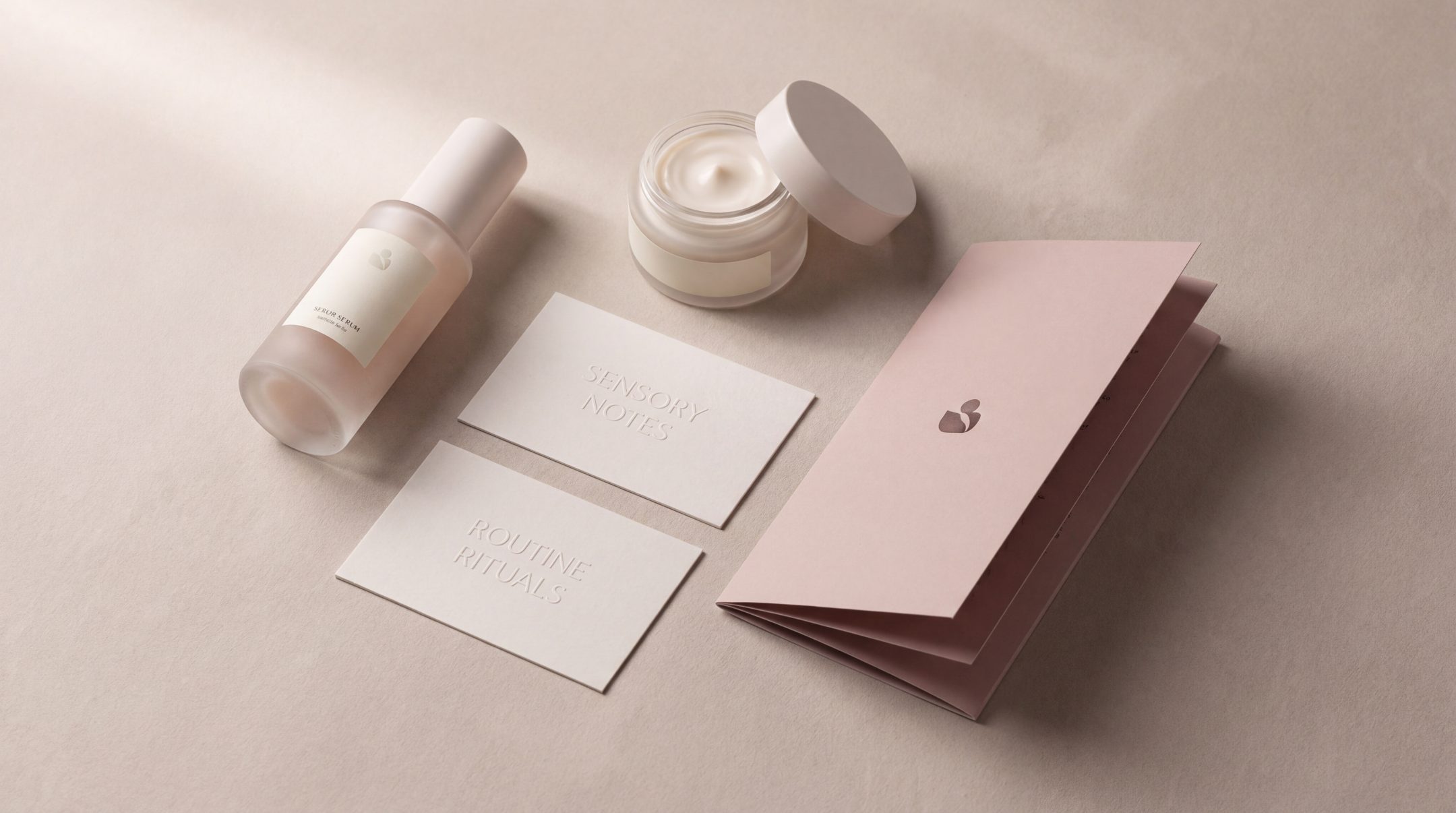
This is why beauty brand storytelling cannot be separated from packaging, social content, website experience or product photography. The same product story has to hold together across the jar, the product page, the launch post, the routine video and the email campaign.
When those elements are aligned, the product feels stronger. When they are disconnected, even a good formula can feel generic.
The Core Requirements of Strong Beauty Product Storytelling
Strong beauty product storytelling is not just poetic language. It is a structured way of making product value easier to understand and more desirable to experience.
Product Benefit
The first requirement is a clear product benefit. Customers need to understand what the product is meant to do and why that matters.
A weak benefit sounds vague:
“Designed to support your glow.”
A stronger benefit is clearer:
“Helps skin feel smoother and more hydrated after cleansing, without a heavy finish.”
The second version gives the customer something easier to imagine. It explains the outcome, the context and the product feel.
For cosmetics brands, benefits should be specific enough to guide decision-making but careful enough not to overclaim. This is especially important in skincare, haircare, dermocosmetics and wellness-adjacent beauty categories, where trust can be damaged by exaggerated promises.
A strong benefit should answer:
- What problem does this product help with?
- What result should the customer expect?
- Why is this benefit relevant to the customer’s routine?
- What makes the product’s approach distinct?
The goal is not to make every benefit sound dramatic. The goal is to make the value clear.
Sensory Detail
Beauty is a sensory category. Texture, scent, finish, weight, absorption, colour payoff and application all influence perceived value.
This is where many cosmetics brands underuse storytelling. They describe what the product is, but not how it feels.
Sensory detail helps customers imagine the product before they try it. A serum may be “lightweight”, but that is still broad. A richer description might explain that it “settles quickly into the skin with a soft, non-sticky finish.” A cleanser may be “gentle”, but it becomes more meaningful when described as “a low-foam cream cleanser that leaves skin feeling comfortable rather than stripped.”
These details support desire because they make the product tangible.
Sensory storytelling is especially useful for:
- Skincare textures
- Fragrance notes
- Makeup finishes
- Body care rituals
- Haircare application
- Premium packaging materials
- Seasonal or limited-edition launches
The key is restraint. Sensory language should be vivid but not inflated. If everything is described as luxurious, indulgent or transformative, nothing feels precise.
Routine and Use Context
Most cosmetics products live inside a routine. A customer wants to know when to use the product, how it fits with other steps and what role it plays in the day.
This gives cosmetics storytelling a practical function. It can reduce confusion and make the product feel easier to adopt.
For example, a product story might clarify:
- Morning or evening use
- Pre-makeup or post-cleansing context
- Weekly treatment versus daily essential
- First step, finishing step or targeted support
- Skin type, hair type or concern-based relevance
This kind of context is also valuable across beauty social content, where customers often discover products through demonstrations, routines, tutorials and before-use explanations.
The strongest routine storytelling does not simply show the product. It shows the product’s role.
A facial mist can be positioned as a midday refresh, a post-cleansing hydration layer or a final step before makeup. Each story changes the product’s perceived purpose.
Visual and Verbal Consistency
Beauty product storytelling needs consistency between what the customer reads and what they see.
If the copy says clinical, but the packaging feels playful, the product story becomes unclear. If the photography feels premium but the product description sounds generic, the perception weakens. If social content is trend-led but the website is formal and minimal, the brand can feel fragmented.
Visual and verbal consistency helps every touchpoint reinforce the same product world.
That includes:
- Product names
- Descriptions
- Claims and benefit language
- Packaging hierarchy
- Colour and material choices
- Photography direction
- Social content tone
- Website product pages
- Email and campaign messaging
This is especially important when a customer moves from discovery to consideration. A strong cosmetics website experience should carry the same product story from first impression through to product detail, comparison and conversion.
In beauty, desire is built through repetition, but not duplication. The story should feel consistent while adapting naturally to each channel.
Common Cosmetics Storytelling Mistakes
Many cosmetics brands have strong products but weak product storytelling. The issue is not always a lack of creativity. More often, it is a lack of structure.
One common mistake is leading with ingredients without explaining why they matter. Ingredient-led communication can build credibility, but only if the customer understands the benefit. Listing actives without context can make the product feel technical rather than desirable.
Another mistake is using overly broad beauty language. Words like glow, clean, radiant, premium, natural and luxurious can be useful, but they lose power when they are not supported by specifics. A product story should explain what kind of glow, what kind of finish, what kind of routine and what kind of customer need.
A third mistake is separating product claims from sensory experience. Customers want to know what a product does, but they also want to know how it feels to use. A product can be effective and still fail to create desire if the experience is poorly described.
There is also a risk in copying category conventions too closely. Many beauty brands begin to sound similar because they use the same language, the same soft-focus visuals and the same minimal claims. This can make the product feel safe, but not distinct.
Finally, some brands tell different stories in different places. The packaging says one thing, the product page says another, the social content introduces a third angle and the email campaign adds a fourth. This weakens memory and makes the brand harder to trust.
Strong cosmetics storytelling does not mean saying more. It means deciding what the product story is and making it clear across every touchpoint.
What Stronger Beauty Storytelling Looks Like
Stronger beauty storytelling starts with a simple question: what should the customer understand, feel and remember about this product?
From there, the brand can build a more focused product narrative.
A strong story might connect a calming moisturiser to a nighttime recovery routine. It might position a tinted balm as an easy everyday confidence product. It might explain a cleansing oil through the feeling of removing the day without stripping the skin. It might frame a fragrance through mood, memory and occasion rather than notes alone.
The strongest cosmetics storytelling usually has five qualities.
First, it is clear. The customer understands the product’s purpose quickly.
Second, it is specific. The story uses details that belong to this product, not any product in the category.
Third, it is sensory. It helps the customer imagine texture, finish, scent, application or ritual.
Fourth, it is credible. It avoids exaggerated claims and makes the product feel trustworthy.
Fifth, it is consistent. The same idea carries through packaging, website, social content and campaign messaging.
This is also where cosmetics content strategy becomes important. Beauty customers often move between channels before making a decision. Think with Google’s connected beauty research highlights that beauty journeys are increasingly shaped by personalised purchase journeys, with shoppers moving through different moments of discovery, evaluation and purchase.
That means product storytelling should not live only on the product page. It should be built into the full content ecosystem.
For example:
- Packaging can establish the product’s role and value
- Website content can deepen the benefit and routine context
- Social content can show texture, use and mood
- Email can connect the product to seasonal needs or customer segments
- Paid campaigns can sharpen the most compelling product angle
When these parts work together, storytelling becomes a commercial asset rather than a layer of copy added at the end.
FAQs
What is beauty product storytelling?
Beauty product storytelling is the way a cosmetics brand turns product details into a clear, desirable and trustworthy narrative. It connects ingredients, benefits, textures, routines and visual identity so customers understand why the product matters.
Why does storytelling matter for cosmetics brands?
Storytelling matters because beauty customers often make decisions based on both practical needs and emotional perception. Strong storytelling helps a product feel relevant, memorable and easier to imagine before purchase.
Is beauty product storytelling only about copywriting?
No. Copywriting is one part of it, but strong product storytelling also includes packaging, photography, visual identity, product page structure, social content, email and campaign direction. The story needs to work across the full customer journey.
How can cosmetics brands make ingredients more meaningful?
Ingredients become more meaningful when they are connected to customer benefits. Instead of only listing what is inside the formula, brands should explain what the ingredient supports, who it is relevant for and how it fits into the product experience.
What makes beauty storytelling feel premium?
Premium beauty storytelling usually feels focused, specific and consistent. It avoids exaggerated language, uses sensory detail carefully and makes the product feel considered across packaging, content, website and brand identity.
Final Thoughts
Beauty product storytelling is not about making cosmetics sound more decorative. It is about making product value clearer, more tangible and more desirable.
When ingredients, benefits, textures, routines and visual identity work together, customers can understand the product faster and feel more confident about why it belongs in their routine.
For cosmetics brands, the opportunity is to move beyond generic beauty language and build stories that feel specific to the product, credible to the customer and consistent across every touchpoint.
Fact & Form helps cosmetics brands turn product features into clearer, more desirable stories across branding, content and digital experience.