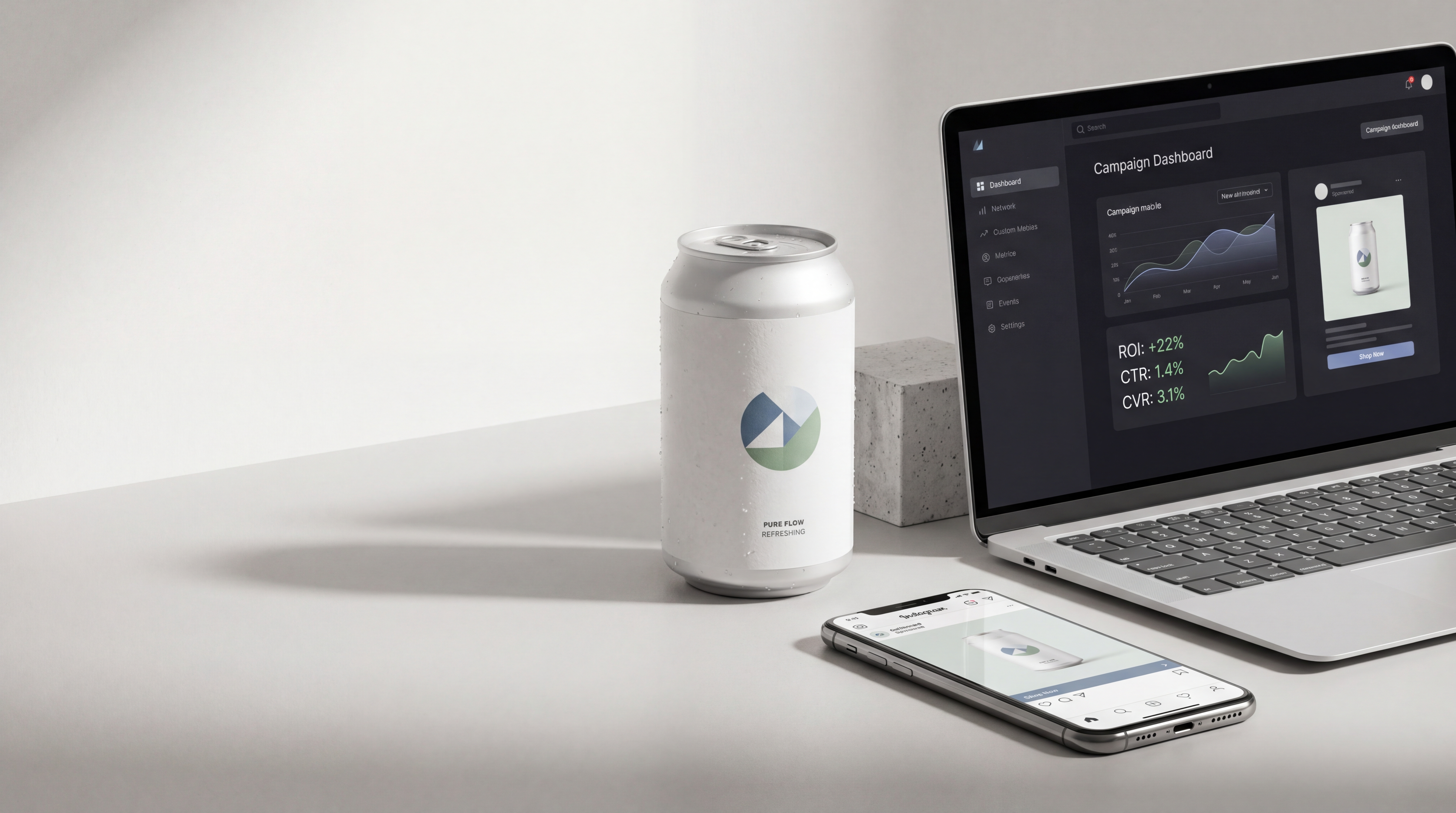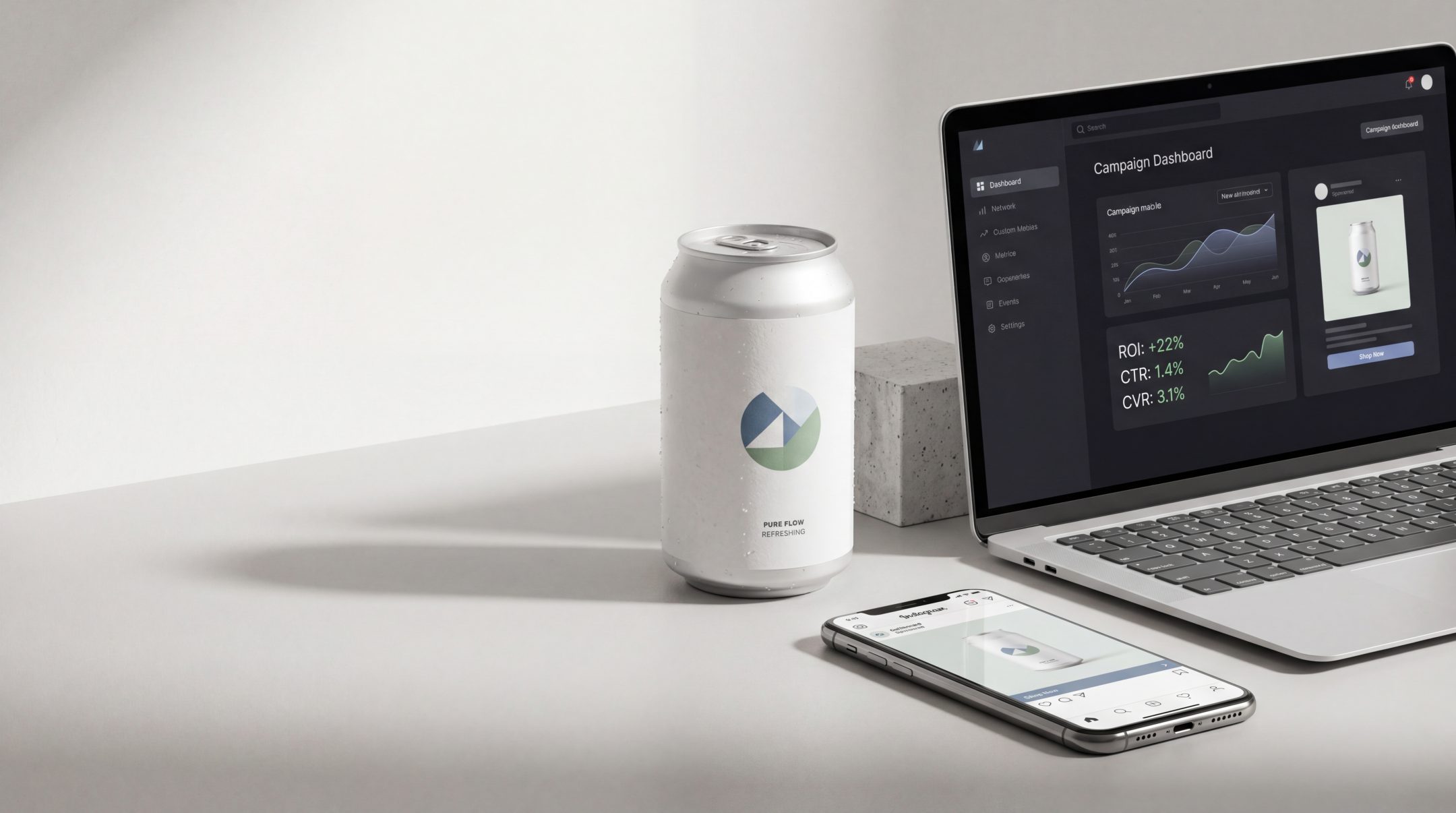
Performance marketing for FMCG brands only works properly when media, message, packaging and buying context all support the same decision. Unlike longer-consideration categories, FMCG campaigns often have very little time to create recognition, communicate value and move the buyer toward action. That means ad performance is rarely just a media issue. It is usually a connection issue.
Why Performance Marketing Works Differently in FMCG
FMCG buying decisions are often fast, habitual and influenced by recognition as much as persuasion. A campaign may create attention, but if the product is not clearly recognised, the pack is not memorable, or the retail environment breaks the message, performance weakens quickly.
That is why performance marketing in this category should not be treated as a narrow optimisation exercise. Paid media may drive traffic, visibility or clicks, but the actual result depends on whether the person can connect what they saw in the ad with what they later see on shelf, in a retail listing or on a landing page.
In practical terms, performance marketing for FMCG brands needs to support a compressed buyer journey. The creative has to do more than generate curiosity. It has to help the audience notice, understand and recognise the product fast.
What Makes FMCG Campaigns More Complex
FMCG campaigns sit inside a more fragmented buying environment than many service or lead generation campaigns.
First, product choice is often comparative. A buyer may see several similar items in a category and make a decision in seconds. That makes distinctive recognition extremely important.
Second, the final conversion point is not always controlled by the brand. A brand might run paid social, display or search activity, but the purchase can still happen through a retailer, a marketplace or a shelf environment with limited brand control.
Third, packaging plays a central commercial role. In FMCG, the pack is not a background asset. It is often the main recognisable object that connects media exposure to purchase intent. Stronger brand recognition in FMCG depends on consistent cues that stay clear across the whole journey.
Finally, campaign performance is affected by many small points of continuity. Product naming, colour use, offer framing, pack visibility, CTA wording and retailer presentation all shape how easy the brand is to choose.
The Core Requirements of Strong FMCG Performance Marketing
Product Recognition
If people cannot quickly identify the product in the ad, the campaign is already underperforming.
Recognition starts with the basics. The product should be visible enough. The pack should not be treated as an afterthought. Brand assets should be clear, not decorative. If the audience remembers the mood of the ad but not the product, the media spend is doing less work than it should.
This is where packaging and performance come together. In FMCG, distinctive packaging can support recall, speed up recognition and make the path from exposure to purchase easier to complete. Good packaging that performs on shelf strengthens performance because it makes the advertised product easier to find and easier to trust.
Recognition also matters because awareness has real commercial value in consumer categories, where familiarity can affect distribution strength and partner confidence as well as buyer response. brand awareness in consumer markets is not just a branding metric. It can influence broader market performance.
Clear Campaign Message
FMCG campaigns usually perform better when they are built around one strong commercial message rather than several competing points.
That message may be functional, emotional or promotional, but it needs to be easy to understand quickly. Is the campaign about taste, convenience, ingredient quality, value, newness, family suitability or everyday practicality? Too many ads try to say everything at once and end up weakening the main reason to buy.
Clarity also matters because many FMCG categories are low-attention environments. The audience is not always looking for a detailed explanation. They are looking for a simple reason to notice and remember the product.
A clear campaign message should also match the product truth. If the ad promises premium quality, the pack and destination should support that. If the ad is price-led, the landing or retail context should make that offer easy to verify.
Creative Consistency
Consistency does not mean repetition for its own sake. It means using the same recognisable system across formats, audiences and placements so the campaign builds momentum instead of fragmenting.
In FMCG performance marketing, consistency often comes from a few disciplined choices: repeated pack visibility, stable visual codes, clear product naming, familiar copy structure and a campaign logic that survives across paid social, display, video and retail placements.
This is also why a broader performance marketing strategy matters. Better results usually come from aligning media, creative and destination experience, not from optimising one channel in isolation.
NielsenIQ also frames campaign effectiveness around the relationship between creative quality and media mix, rather than media spend alone. Stronger marketing effectiveness across media and creative depends on pairing creative impact with the right cross-media setup.
Shelf or Landing Page Continuity
A strong ad should make the next step easier, not harder.
For FMCG brands, that next step may be a retailer page, a marketplace listing, a D2C landing page or a physical shelf. In each case, continuity matters. The buyer should feel that they have arrived at the same product they just saw advertised.
That means key visual cues should carry through. The pack should match. The message should still make sense. The offer should not disappear. The product title, imagery and supporting language should reinforce the ad, not force the user to re-interpret it.
This is one of the most overlooked performance issues in FMCG. Teams often spend heavily on reach and creative testing, then lose efficiency because the destination experience feels disconnected from the ad that brought the user there.
Common FMCG Performance Marketing Mistakes
One common mistake is treating media as separate from product communication. A campaign may be technically well targeted, but still weak because the product is not recognisable or the message is unclear.
Another is underusing the pack in creative. In FMCG, the pack is often the bridge between attention and purchase. Hiding it, stylising it too heavily or showing it too late can reduce recognition.
A third mistake is changing the message too often across placements. When every format uses different claims, visuals or product emphasis, the campaign loses cumulative effect.
Brands also make mistakes when they ignore the retail or landing page context. If the creative says one thing and the product page shows another, trust falls. If the ad highlights a benefit but the listing does not support it, conversion friction rises.
Finally, some campaigns optimise too narrowly around short-term media metrics. Click-through rate can be useful, but it is not the whole picture. In FMCG, performance should also be judged by recognisability, continuity and how well the campaign supports actual product choice.
What Stronger FMCG Campaign Execution Looks Like
Stronger execution usually starts with a more connected planning model.
The product is visible from the start. The message is disciplined. The packaging works as a memory cue rather than a decorative asset. The destination reflects the promise of the ad. Creative variations are adapted, but not reinvented.
This kind of execution also respects the reality of FMCG buying behaviour. People often decide quickly. They rely on familiarity, recognition and simple reasons to choose. Campaigns should reduce effort, not add interpretation.
In practice, better FMCG performance marketing often includes:
- creative built around the actual product rather than abstract lifestyle imagery
- messaging that prioritises one clear buying reason
- packaging cues that stay stable across ad formats
- retailer or landing environments that continue the same visual and verbal logic
- reporting that looks beyond media efficiency alone and asks whether the campaign made the product easier to notice and easier to choose
When those elements are aligned, paid media becomes more efficient because it is supporting a commercially coherent system.
FAQs
What is performance marketing for FMCG brands?
Performance marketing for FMCG brands is a paid media approach designed to drive measurable outcomes while supporting fast product recognition, clear messaging and smoother buying decisions across retail and digital environments.
Why is packaging so important in FMCG performance campaigns?
Packaging often acts as the main recognition device between ad exposure and purchase. If the pack is distinctive and consistently shown, it helps buyers connect the campaign to the product they later see on shelf or on a retailer page.
Should FMCG campaigns focus more on branding or conversion?
They usually need both working together. In FMCG, recognition and conversion are closely linked. A conversion-focused campaign still depends on brand cues, product clarity and continuity across touchpoints.
What breaks FMCG campaign performance most often?
The biggest problems are usually weak product visibility, inconsistent creative, unclear value communication and a disconnect between the ad and the shelf, listing or landing page.
Final Thoughts
Performance marketing for FMCG brands works best when it is built around recognition, message clarity and continuity. Media can generate reach, but reach alone does not make products easier to choose. The real improvement comes when paid activity, packaging, product communication and buying context reinforce the same decision.
If your campaigns are generating visibility but not enough commercial traction, it may be time to look more closely at how ads, product identity and destination experience are working together.